What Brazilian 'accessible' actually means, and what it doesn’t
Brazilian hotel regulations (NBR 9050) require 5% of rooms in new-build hotels to be adaptado, meaning wider doors, a roll-in shower or grab-bar tub, and lower switches. Enforcement is patchy in older properties, and the word acessível gets used liberally in listings for hotels where the accessible room is on the third floor of a building with no lift. Ask three specific questions when you book: door width in centimetres, shower type (roll-in vs step-over vs grab-bar tub), and route from the parking to the room.
Beyond the room itself, the harder issue in Santa Catarina is the surrounding infrastructure. Cobbled streets in the historic centres (São Francisco do Sul, Laguna, Blumenau's Vila Itoupava), sandy access to beaches, and steep hillside pousadas in Rosa all limit what's usable regardless of what the hotel promises. The strongest accessible destinations are the flat, planned resort areas: Balneário Camboriú, Meia Praia in Itapema, Jurerê Internacional, and the Beiramar sector of Florianópolis Centro.
Balneário Camboriú: the strongest accessible base
Balneário Camboriú is flat, has wide paved sidewalks along Avenida Atlântica, dropped kerbs at most crossings, and a beachfront calçadão with a continuous 5.5-kilometre level surface. The high-rise hotels along the avenue are mostly post-2000 construction with lifts, accessible parking and at least one adaptado room per property. Rates for accessible rooms typically match or slightly undercut the equivalent standard room (hotels often struggle to fill them). Book R$450-900 a night in shoulder season for a front-line accessible room.
The beach itself has three cadeirinha anfíbia (amphibious beach wheelchair) stations along Praia Central, operated free during December to March by the municipality. The cable car (Parque Unipraias) has wheelchair-accessible cabins and reaches Praia de Laranjeiras and Praia de Taquarinhas. The catch: summer crowds on the calçadão make navigation slow, and the beach chair stations run out of loaners by 10:30 on peak days. Book weekday visits or arrive early.
Meia Praia and Itapema
Meia Praia is the underrated accessible pick. The beachfront avenue is flat, the sidewalks are wide, and the newer condo-hotels (2010 onward) are built with proper accessible units and lifts. It has less pedestrian congestion than Balneário Camboriú, more beach width, and rates 20-30% lower for equivalent accessible rooms. Expect R$380-700 a night for a front-line adaptado room. The beach has fewer amphibious wheelchair stations (usually one, at the Meia Praia píer) but they’re less oversubscribed than BC's.
Itapema Centro, further south from Meia Praia, is less useful — narrower sidewalks, more slope, older buildings. Stay in Meia Praia proper, ideally between the píer and the Igreja Matriz, where the flat grid and the hotel stock coincide. The BR-101 access is straightforward with accessible parking at most properties. If you’re driving a modified vehicle, confirm garage headroom (many BC and Itapema high-rises have 2.1-2.2m clearance, tight for adapted vans).
Jurerê Internacional
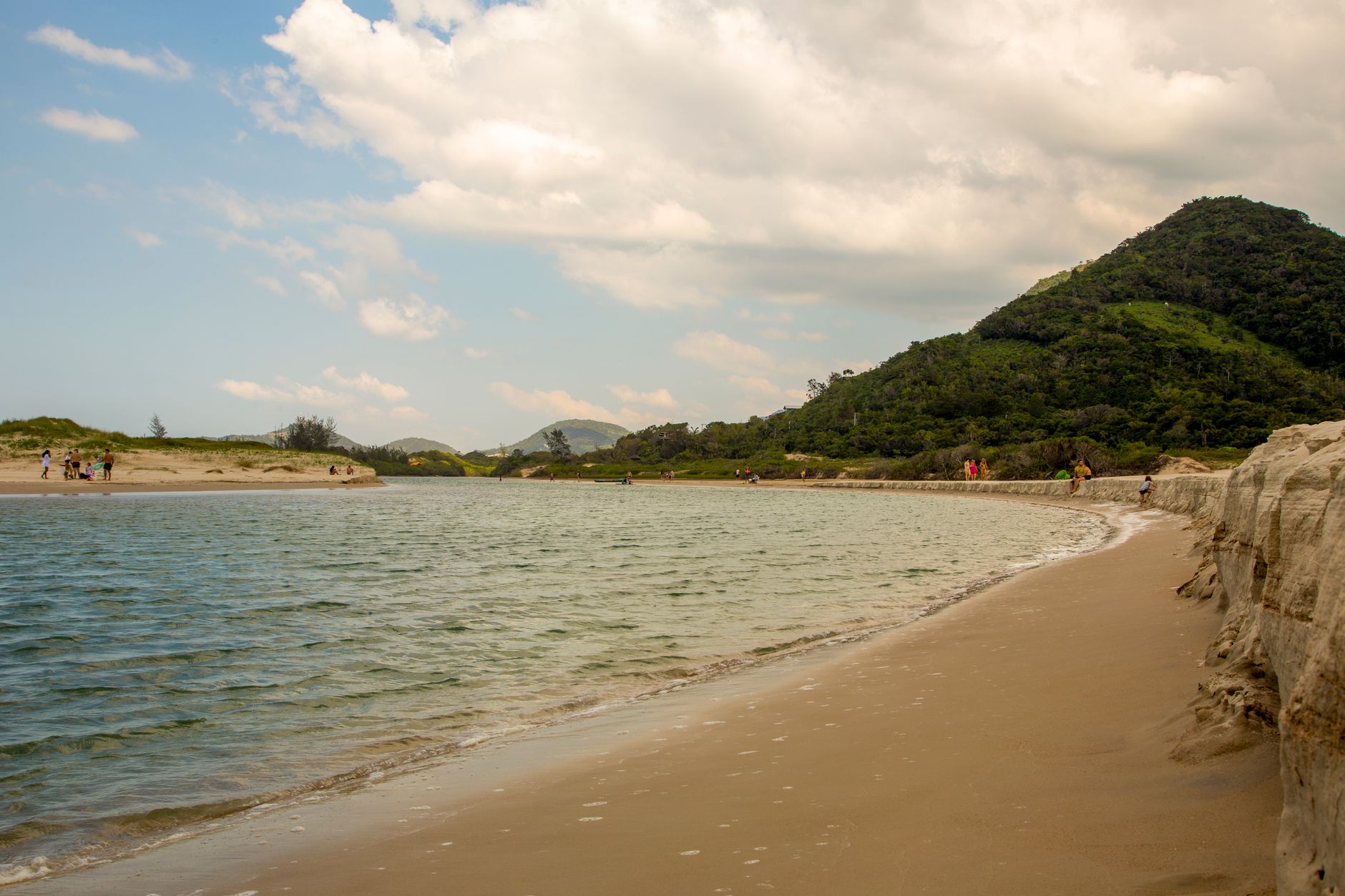
Jurerê's low-rise, planned layout works well for accessibility in principle: wide streets, level sidewalks, most hotels with ground-floor or lifted access. In practice, the beach itself is the challenge — the sand is soft and deep, and only two of the beach clubs (Parador and one of the smaller kiosks) operate amphibious beach wheelchairs, and only for their own guests. Book directly with a beach club that offers the service if beach access matters.
Room-wise, Jurerê has some of the best-designed accessible units in the state at the four and five-star properties, with roll-in showers, grab-bar-equipped bathrooms, wider corridors and often connecting rooms for a carer. Rates R$900-2,400 a night in January, R$500-1,100 in shoulder. The village supermarket, pharmacy and restaurants are all wheelchair-accessible with dropped kerbs and level entries — one of the few areas in the state where you can shop and dine independently without pre-planning routes.
Florianópolis Centro and Beiramar
The Beiramar Norte sector between the Ponte Hercílio Luz and Iguatemi shopping mall has flat, wide sidewalks along Avenida Beira-Mar Norte, a paved seafront trail, and a cluster of chain hotels with proper accessible rooms. This is the base to choose if you want city amenities, hospital access (several major hospitals within 3 km), and level ground. Rates R$400-750 a night for accessible rooms in mid-tier chains, less than the beach areas.
The old town Centro up the hill has cobbles, steep streets and narrow sidewalks — usable with effort but not what you’d choose. The best combination is a Beiramar hotel base with taxis or accessible Ubers (request 'Uber Acessível' where available) to specific destinations: the Mercado Público for lunch, the ferry terminal for a boat trip, the shopping mall for cinema. Public buses have wheelchair ramps but many drivers are inconsistent about deploying them; taxis are more reliable.
The serra: Urubici and São Joaquim, honestly
The serra is beautiful but hard for mobility-limited visitors. The main attractions — Serra do Corvo Branco, Morro da Igreja, the canyon viewpoints — involve either unpaved roads, walks over uneven ground, or both. A wheelchair user can enjoy the drive-up viewpoints (Pedra Furada is reachable but not close-approach accessible) and some of the hotel gardens, but the trail experience of the region is largely out of reach.
If you want the serra atmosphere accessibly, base in Urubici centre at one of the newer hotels (2015 onward) that have ground-floor accessible rooms, and plan car-based sightseeing with a driver who knows the terrain. Rates R$550-900 a night. Avoid the hillside pousadas with 'panoramic views' — they invariably involve steps, sloping paths and outdoor showers designed for able-bodied use. Save the serra for after the coast, and don’t push for the harder viewpoints.
Areas to skip or approach cautiously
Praia do Rosa is essentially inaccessible for wheelchair users. The pousadas are on hills, the paths are sand and dirt, and the beach access from most stays involves a 15-minute descent that's hard even for walking-frame users. The village of Rosa itself has narrow sand tracks between properties. Anyone with significant mobility limitations should skip Rosa and choose Garopaba centre instead, which has flatter access and some newer accessible accommodations.
Similarly, avoid Bombinhas centre (narrow streets, dated buildings, tight pousadas) in favour of Bombas across the peninsula, where the newer condo-style hotels have lifts and level access. Ingleses and Canasvieiras have flat terrain but the hotel stock is older and often lacks proper lifts to accessible units. Blumenau's Centro is walkable but has cobbled sections in the Vila Itoupava historic area — the Vila Germânica event complex is accessible, the surrounding streets less so.
Practical booking sequence that works
Filter first by area (Balneário Camboriú, Meia Praia, Jurerê, Beiramar Florianópolis for the strongest four options). Second, contact the hotel directly with a specific checklist: door width, shower type, bed height, distance from accessible parking to room, availability of a fridge for medications, whether the reception is at street level or up steps. Third, request photos of the accessible room and bathroom — not the standard room. This filters out the properties whose 'accessible' room is a slightly wider door and nothing else.
Budget an extra R$100-200 a day for accessible taxis, beach wheelchair rental at properties that don’t include it (R$60-120 for a half-day at some concessions), and the occasional Uber ride to skip a difficult route. Plan rest days into a two-week trip; the cumulative effort of navigating a foreign infrastructure is more tiring than a comparable trip in a fully-adapted destination. The payoff is that Santa Catarina's flat coastal resorts genuinely deliver a beach holiday, which many South American destinations don’t.
Good to know
Questions, answered
Are Santa Catarina's beaches wheelchair-accessible?
Only where the municipality operates a cadeira anfíbia (amphibious beach wheelchair) programme. This includes Balneário Camboriú (three stations on Praia Central), Meia Praia (one at the píer), and seasonally at Bombas, Canasvieiras and Ingleses. Praia do Rosa, Garopaba's outer beaches, and most Bombinhas peninsula beaches have no organised beach chair service. Reserve ahead where possible; supplies run out on peak summer days.
Which airport is easiest for mobility-limited travellers?
Florianópolis's Hercílio Luz airport (FLN) is modern (rebuilt 2019), fully accessible, with jetways, accessible restrooms and clear signage. Navegantes (NVT) is smaller but also accessible. Both have accessible taxi and rental car options. Joinville's airport is functional but older. Fly into FLN for the best door-to-door experience, particularly if connecting to a beach resort in Balneário Camboriú or Meia Praia (1-hour drive).
Can I rent an adapted vehicle in Santa Catarina?
Limited options. Movida and Localiza offer hand-control conversions with 2-3 weeks' notice at Florianópolis and Joinville airports, R$180-320 a day. Wheelchair-lift vans are harder — only a handful of specialty operators in Florianópolis and Balneário Camboriú, mostly for medical transport rather than tourist rental. If a lift van is essential, arrange in advance with a specialised transfer company for airport pickups and pre-booked excursions rather than daily rental.
Doing good is the business: every booking through Stay Santa Catarina funds one verified tonne of carbon removal — same room, same price, no markup.
Start your search