Seasons & events
The Santa Catarina rainy season, and why it does not exist the way you think
Rainfall is spread across the year here — but three months bring 60% more than the others, and that is when a R$320 room becomes a bargain.
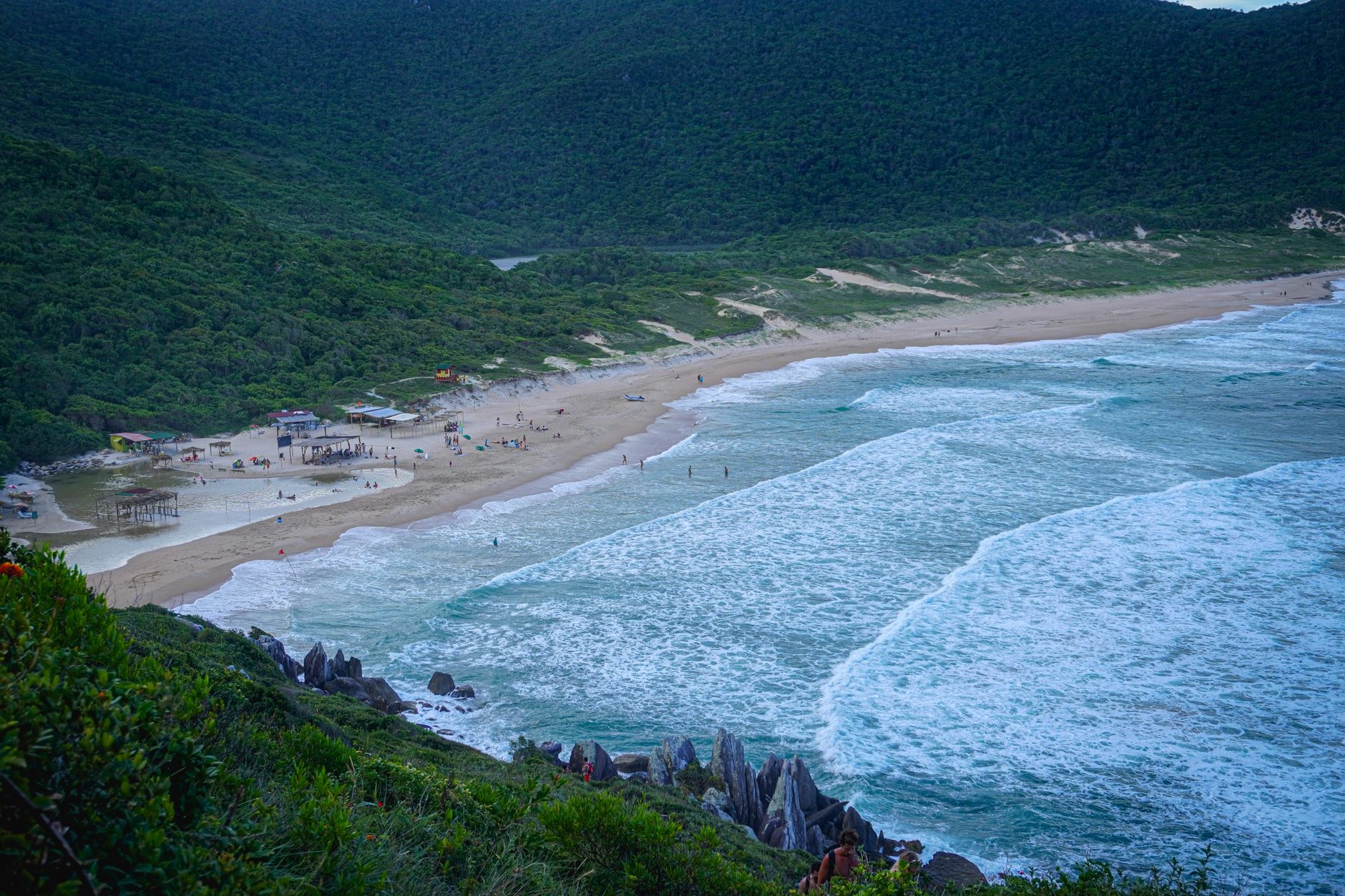
There is no wet season, but there are wet months
If you have travelled elsewhere in Brazil — Amazonia, the Pantanal, even the Northeast — you arrive in Santa Catarina expecting a defined dry season and wet season. There is not one. The state sits in a subtropical humid zone, and rain falls in every month of the year, spread relatively evenly. The annual average around Florianopolis is 1,500-1,700mm, and no month averages below 80mm or above 200mm. This means you cannot escape rain by picking the right month, and it means rain is never the story-ender it is in the tropics.
What does exist is a wet-tilt in three months — January, February and September — when rainfall averages 170-200mm versus 90-110mm in the drier months (April, May, August). Even in the wet months the rain typically comes as afternoon thunderstorms of 30-90 minutes, not day-long grey. The whole trick is understanding that Santa Catarina rain is intense, short and usually predictable by 11am, and planning your day around it rather than fearing it.
January and February: the tropical-style downpour
Summer rain here is convective — heat builds through the morning, cumulus stacks up over the interior mountains around noon, and by 3-5pm the coast gets hit with a proper thunderstorm. Streets flood in Florianopolis centro for 20 minutes, the beach kitchens close their sides, and everyone waits it out with a beer under a canopy. By 6pm it is over and the sunset is spectacular. This pattern holds through January and most of February, and it is why locals plan beach time for mornings and lunches, and social time for evenings.
The catch is that when a proper frente fria (cold front) parks over the state — usually once or twice a summer — you get two to three days of continuous rain and dropped temperatures. When this hits during your holiday and you have paid January rates of R$700+ per night, it stings. There is nothing you can do about it forecasting-wise more than five days out. Build a rain plan into the trip: a museum day in Florianopolis, an outlet shopping run to Balneario Camboriu, a serra detour, a long lunch at Ribeirao da Ilha.
September: the quiet wet month nobody warns you about
September is the sleeper. It averages more rain than January in some years — 180-220mm — because spring cold fronts stall against warming coastal air and produce three or four-day rain events. The catch is that September is otherwise gorgeous: mild temperatures, whales offshore, empty beaches and cheap rooms. If you get lucky with the weather, September is one of the best months of the year. If you hit a rain event, three days of your week are gone.
The strategy for September is a longer trip and a flexible itinerary. Six nights instead of four, split between coast and serra, so a rain event on the coast becomes a driving day up to Urubici where fronts often break as they climb the escarpment. Book pousadas with a good indoor space — a proper breakfast room, a covered veranda, a games area — because you will use them. And check the five-day forecast the moment you land; if a front is coming, front-load your beach days.
The dry-tilt months: April, May, August
The three drier months average 80-110mm of rain each and often deliver stretches of five to eight clear days at a time. April is the best of them because temperatures are still summer-like (24-27°C, sea at 22-24°C) but the humidity has dropped and the thunderstorm pattern has broken. May is cooler but crisp, with the year's clearest air and longest visibility from viewpoints. August delivers cold but dry days on the coast and the serra's most stable weather for viewpoints and drives.
These are the months to plan visibility-dependent activities: a boat trip to Ilha do Campeche (April), a hang-glide off Morro da Cruz (April-May), a whale trip out of Rosa (August has the whales but May has the clearer water), a serra viewpoint circuit around Urubici (May-August). Photographers, hikers and anyone who came for a specific view rather than the beach itself should target these months over the wetter ones even though the shoulder-season prices are almost identical.
Reading the forecast: what actually works
Brazilian weather apps for Santa Catarina are reliable to about 72 hours and useless beyond seven. INMET (the national met service) publishes a daily bulletin that names incoming frentes frias by 48 hours out — this is the one the locals check. The pattern to watch for is a system moving up from Rio Grande do Sul; when it appears on the map, you have 12-36 hours before it hits the SC coast, and it will typically last two to three days on the coast and one to two in the serra.
Ignore the percentage-of-rain figures on generic apps — they are calibrated for temperate climates and always overstate summer risk here. A 60% chance of rain in a Floripa January afternoon means an afternoon thunderstorm followed by clear evening, not a washed-out day. What you want to read is the coloured radar image every morning at breakfast, which will show you whether the day's storm cell is coming or has already passed north. Twenty minutes of radar-watching a day gets you 80% of the information the locals use.
What the wet months cost, and what you get
Prices track school holidays more than they track rain, so January and February — the wettest months — are also the most expensive: R$550-950 for a mid-range pousada double, four-to-seven night minimums. September, despite similar rainfall totals, is one of the year's cheapest months at R$280-400 because Brazilian domestic tourism is at a low point. This is the arbitrage: same rain risk, half the price, a third of the crowds. Combine it with the fact that whales are offshore and you have September's real value proposition.
What you sacrifice in September is warm sea. The water is 18-19°C, which is a fast dip and out, not lounging. If lying in warm sea is the point of your trip, wet-tilt-but-warm January is the price you pay. If a walking, eating, driving, whale-watching, mountain-visiting holiday is the point, wet-tilt-but-cheap September wins by a wide margin. This decision — warmth vs value — is the single most useful frame for choosing between the state's two most misunderstood months.
Storm-day plans by region
On a wet Floripa day, the Mercado Publico in centro is a two-hour lunch. The MASC (museum of contemporary art) and the fortresses of Santo Antonio and Sao Jose (accessible by short ferry from Sambaqui and Ratones when the sea allows) fill an afternoon. Ribeirao da Ilha's oyster restaurants run rain or shine and the drive down the western coast of the island is beautiful in cloud. In Balneario Camboriu, the outlet malls at Itajai and the Unipraias cable car (which runs unless there are lightning risks) both work.
On a wet serra day, the wine tastings at Villa Francioni and the smaller vineyards around Sao Joaquim are actively better in cloud — cool cellars, log fires, the light through cloud on the vines. The Museu Nacional da Maca in Fraiburgo (an hour from Sao Joaquim) is one of Brazil's more unexpectedly good small museums. In Blumenau, the Vila Germanica complex and the brewery tours (Eisenbahn, Bierland, Wunder Bier) fill a wet day easily and end with a proper meal. Rain is a redirect here, not a cancellation.
Good to know
Questions, answered
Does it rain every day in the Santa Catarina summer?
No — it rains most afternoons in January and February, but usually as a 30-90 minute thunderstorm between 2pm and 6pm, not all day. Full rain days (two or three consecutive) happen once or twice per summer when a cold front stalls, and the rest of the time you get clear mornings and evenings around the storm.
Which month has the least rain?
August, closely followed by May and April, all averaging 80-100mm. August is the driest on the coast but coldest for swimming. April is the best combination of low rainfall, warm sea and warm air. Any of the three delivers stretches of five to eight clear days that are almost impossible to get in January.
Should I bring a raincoat or an umbrella?
A packable rain jacket, not an umbrella. Summer thunderstorms come with wind that inverts umbrellas immediately, and winter rain is often driven sideways by cold fronts. A hood and hands free to hold shopping or a camera is the right setup. Waterproof shoes matter more than most people realise, especially for the winter serra.
Are boat trips and beach activities cancelled in rain?
Boat trips to Ilha do Campeche and whale trips from Rosa are cancelled for wind and swell rather than rain itself — heavy rain usually comes with the conditions that stop boats, so effectively yes. Beach kitchens and lifeguard-supervised swimming continue in light rain but shut for thunderstorms with lightning. Surf schools run in rain if the sea state is safe.
Doing good is the business: every booking through Stay Santa Catarina funds one verified tonne of carbon removal — same room, same price, no markup.
Start your search