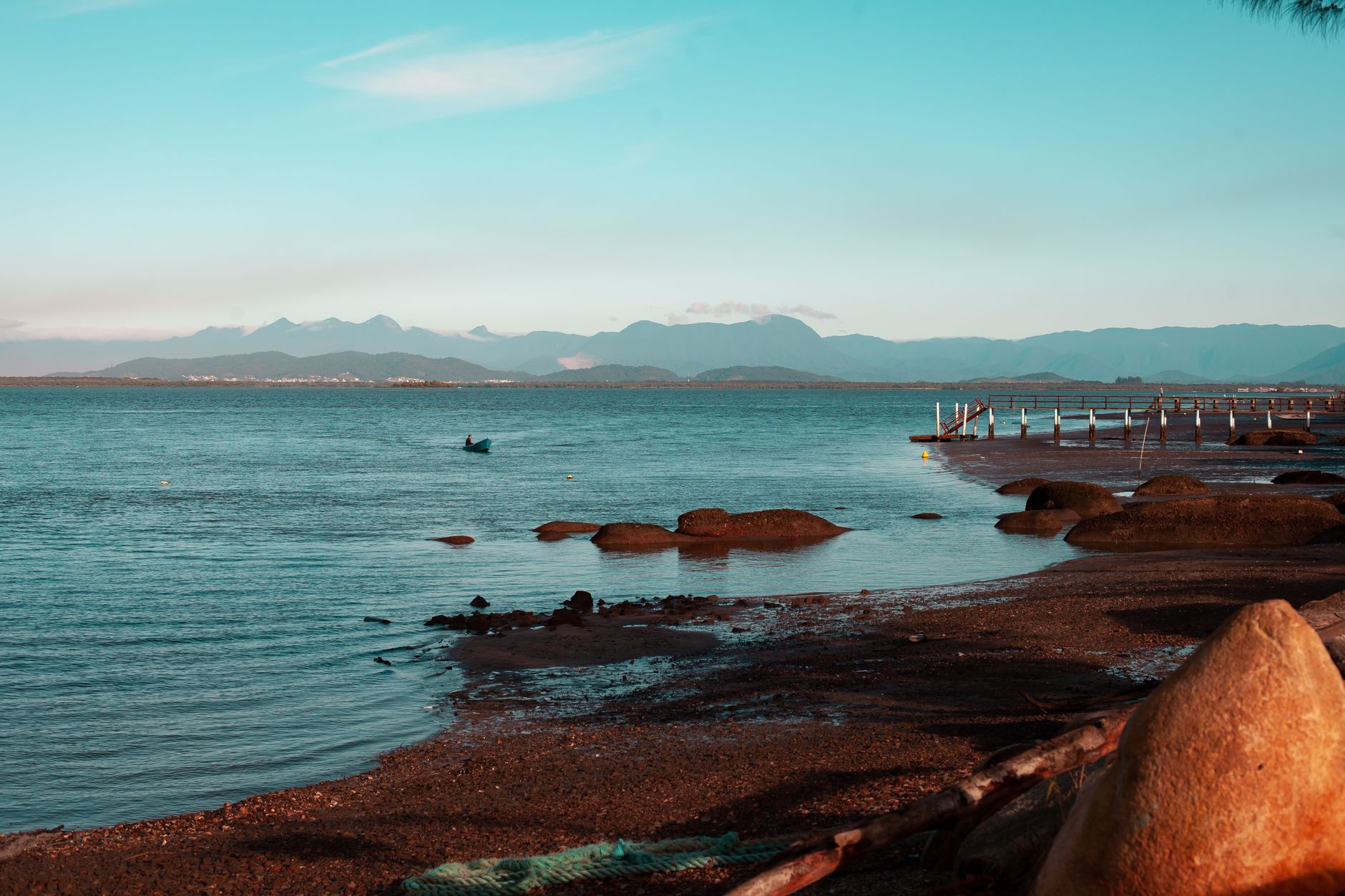
Why shoulder season is the local secret
Ask anyone who lives in Florianopolis when they take their own holidays and they will name April or October before they finish the sentence. The Carnaval crowds have gone home, the water is still 22-24°C, the trade winds have dropped, and a pousada room in Praia do Rosa that cost R$780 in January is back to R$380. The queues at Ostradamus in Ribeirao da Ilha are gone. Parking at Joaquina is free and easy. You can walk into Ataliba without a reservation on a Tuesday. Nothing has closed yet — everything has just exhaled.
The catch is that shoulder season here is narrow. April and early May, then mid-September through October: that is the whole window. June through August the water is cold and half the beach kitchens shut. November onwards prices start climbing week by week toward Christmas. If you can travel outside school holidays and you do not need 28°C sea, these four months are when Santa Catarina works best — and when it looks most like the place its residents actually live in.
April: the summer hangover in the best way
April is the month when the coast feels like it belongs to grown-ups again. Daytime highs sit at 24-26°C, the sea holds 23-24°C from the summer, and the humidity finally breaks. Semana Santa (Easter week) is the one spike — book around it, not through it, because pousadas in Garopaba and Bombinhas double their rates for those four nights and fill by February. Outside that week, expect R$320-450 for a decent pousada double in Praia do Rosa, R$280-380 in Bombinhas, R$400-550 for a mid-range hotel in Jurere or Lagoa.
Everything is still open in April. The beach barracas at Campeche and Mocambique are running full menus. Surf schools in Praia Mole take walk-ins. The whale-watching boats out of Imbituba have not started yet — those begin in June — but the water is warm enough for a proper swim and the sunsets over Lagoa da Conceicao stretch to 6:30pm. If you want the summer without the summer, book the second half of April. It is the single best fortnight on the calendar for a first visit.
May: the shoulder tips toward winter
May is where the coast splits in two. The first half still feels like autumn: sea at 21-22°C, air at 22-24°C, the odd 27°C afternoon. The second half brings the first proper cold fronts down from Argentina, and you can lose three days to grey drizzle and 16°C. Pack a jacket and a plan B. Rooms are the cheapest they will be all year outside deep winter — R$260-380 gets you a good pousada double almost anywhere on the coast, and the boutique places in Rosa run midweek deals that undercut their January rate by half.
May is also when the serra comes into its own. Urubici sees its first frosts around the third week, sometimes a light snow flurry at Morro da Igreja, and the Sao Joaquim apple harvest is finishing. A room at a colonial-style pousada up there runs R$350-500 with breakfast and a wood stove going. Combine three nights on the coast with three nights in the mountains and you get two completely different holidays for the price of one January week in Bombinhas.
September: spring arrives from the south
September is April in reverse — cooler, wetter, but climbing. Early in the month you still get winter days: 17°C, wind off the sea, restaurants half-empty. By the last week the almond trees in Florianopolis centro are flowering, the ipes are turning yellow along the Beira-Mar, and the temperature is nudging 24°C on the good afternoons. The sea is still cold, 18-19°C, so this is not a swimming month. It is a walking, eating and driving month, and it is glorious for it.
September is peak whale season off Praia do Rosa and Imbituba — southern right whales calve in the bay from July to November, and September is the reliable middle. Boat trips run R$180-260 per person, and from the clifftops at Rosa you can often see them from a beach chair with binoculars. Pousada rates hold at winter lows through most of the month: R$280-400 for a good double in Rosa, R$260-360 in Garopaba, R$320-450 in central Florianopolis. Book anything with a view of the water.
October: the last cheap month
October is the pivot. Early in the month you still get shoulder-season prices and empty beaches. By the last week the pre-summer creep has begun: pousadas quietly lift their rates 15-20%, the surf schools raise their hourly rate, and the beach kitchens that shut in June start opening back up for the season. If you can travel in the first fortnight of October, do — you get 23-26°C days, a sea at 20-21°C that is swimmable on the warm afternoons, and rates that still start around R$300 for a proper pousada double.
October also delivers the year's two best long weekends before Christmas: the 12th (Nossa Senhora Aparecida) and Servidor Publico around the 28th. Both spike prices for three or four nights but leave the surrounding weeks untouched. Blumenau is worth a detour any weekend in October — the Oktoberfest runs the first three weeks, hotel rates in Blumenau itself double to R$400-600, but stay in Pomerode 30 minutes away for R$220-320 and drive in for the evening.
What costs what, by month
Rough numbers for a mid-range pousada double with breakfast, off school-holiday weeks: April R$320-450, May R$260-380, September R$280-400, October R$300-450 rising to R$400-550 in the final week. The same room in January or February runs R$550-900, and over New Year and Carnaval it clears R$1,000 easily. Boutique places in Praia do Rosa and Jurere show the sharpest drops — a suite that is R$1,400 on a January Saturday is often R$550-650 on an April or September Tuesday, and the owners will negotiate three-night midweek stays directly by WhatsApp.
Car hire tracks the same curve. A compact from the Florianopolis airport counter is R$110-140 a day in shoulder season versus R$220-300 in January. Flights from Sao Paulo Guarulhos to Floripa sit around R$450-700 return in shoulder months, roughly half the summer peak. The one thing that does not get cheaper is fuel: budget R$6.20 a litre for petrol whatever the month, and factor R$180-240 in tolls if you drive down from Sao Paulo.
What actually shuts, and what stays open
The honest bit: shoulder season here is not winter, but it is not summer either, and a handful of beach businesses do close. Some barracas at less-visited beaches (Gamboa, parts of Mocambique, the southern tip of Campeche) shut Monday to Wednesday from mid-April, and a few close entirely from June. The lifeguard towers scale back to weekends only after mid-April at most beaches, and fully close in June. Ferries and boat trips to Ilha do Campeche run reduced schedules — usually weekends only from May through August — so check the day before, not the day of.
What stays open: every hotel, every pousada, every serious restaurant, all the museums, all the shopping, the whole Ribeirao da Ilha oyster strip, the entire Lagoa da Conceicao food scene, the Mercado Publico in centro, and every road you would want to drive. The serra towns — Urubici, Sao Joaquim, Treze Tilias — actively prefer the shoulder and winter months and put on their best face for them. Nothing important shuts. You just get it without the queue.
Good to know
Questions, answered
Is the sea warm enough to swim in April and October?
April yes — the sea holds 23-24°C from summer and swimming is easy. October is borderline: 19-21°C, fine for a quick dip on a 26°C afternoon but cold for lounging in. May and September are wetsuit-or-nothing months at 18-21°C, and the locals mostly stay on the sand.
Which shoulder month is best for a first visit?
Second half of April, without much argument. You get near-summer sea temperatures, empty beaches, everything open, shoulder-season prices around R$320-450 for a good pousada double, and stable weather. Late September is the runner-up if you want whale watching off Praia do Rosa, but the sea is too cold to swim.
Do I need to book ahead in shoulder season?
For weekdays, no — walk-in rates are often better than online rates and owners will bargain. For weekends and the long weekends around Easter, 12 October and 28 October, book 3-4 weeks out because Brazilian domestic tourists fill the good pousadas for those specific dates while leaving surrounding weeks quiet.
Is Carnaval really that different from a normal week?
Yes — Carnaval and the fortnight around it are the price and crowd peak of the entire year, with pousadas at 2-3x their shoulder rate, four-night minimums, and traffic on the island reduced to walking pace. If your dates are flexible, the week before Carnaval is already 40% cheaper than Carnaval itself.
Doing good is the business: every booking through Stay Santa Catarina funds one verified tonne of carbon removal — same room, same price, no markup.
Start your search