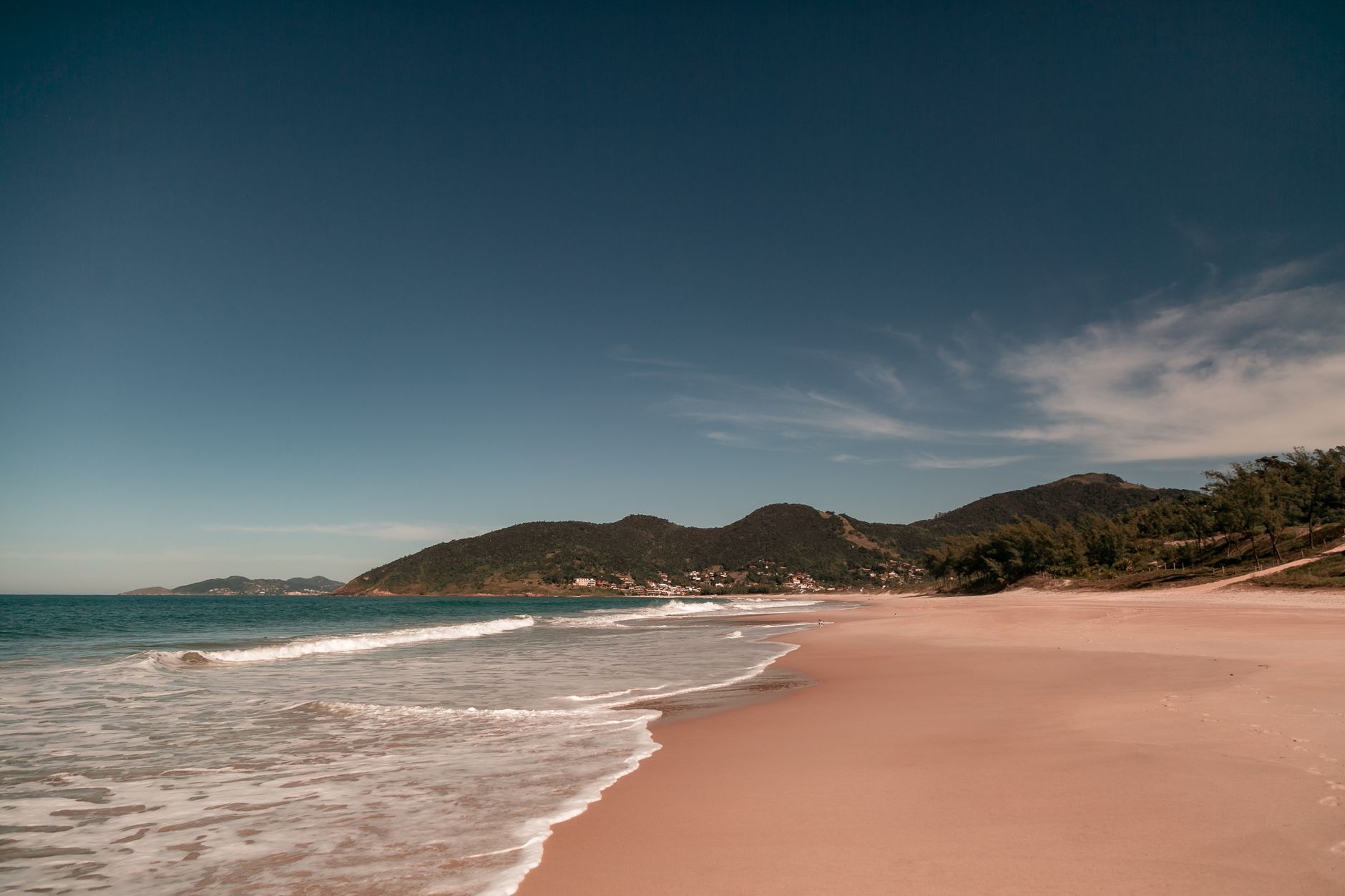
Two states in one
Santa Catarina in January and Santa Catarina in July are not variations of the same holiday — they are different holidays that happen to share an airport. Summer here is a beach state: 28°C, warm sea, packed pousadas on Florianopolis, Bombinhas and Praia do Rosa, and Brazilian domestic tourism at full volume. Winter here is a mountain state: -2°C dawns in the serra, apple wine and trout dinners in Urubici, snow chases at Sao Joaquim, and the beaches mostly empty and cheap. Trying to do both properly in one week is possible but exhausting; picking the right one for your interests is the more useful question.
This post is the direct comparison — same categories, honest verdicts. Read it as a decision aid before you book flights, because the flight into Florianopolis costs the same in either season, but the on-the-ground price, the crowds, the activities and the actual experience diverge by so much that mixing them up costs you a memorable trip. If you know what you want out of Brazil, one of the two seasons is clearly right for you and the other is clearly wrong.
Price: winter wins by a lot
Summer, December to February: mid-range pousada doubles run R$550-950, boutique places R$900-1,600, minimum stays of 4-7 nights, and the good ones book out by October. A week for two in Florianopolis with a hire car, restaurants and activities lands around R$8,000-12,000 all in. Airport transfers cost more, restaurants raise prices 15-25% for the season, and beach umbrellas at commercial beaches carry a R$60-100 daily rental you cannot really opt out of.
Winter, June to August: mid-range pousada doubles run R$260-450 on the coast and R$320-550 in the serra (higher in July, cheaper in June and August). The same week for two — with a hire car, serra trip and full itinerary — lands around R$4,500-7,000. That is a difference of R$3,000-5,000 for the same holiday length, and the winter version includes experiences (frost, wood fires, apple orchards) you cannot buy in summer. If price is a factor at all, winter wins outright.
Weather: summer wins if the beach is the point
Summer delivers 25-30°C days, sea temperatures of 25-28°C, and the classic Brazilian beach experience of warm nights and afternoon thunderstorms. If you are here to swim, surf, sunbathe, drink beach beers and walk barefoot from June to breakfast, summer is not just better — it is the only real option. Winter sea temperatures of 17-19°C mean the beach becomes a place to walk and photograph, not to swim in.
Winter delivers 14-20°C days on the coast (occasionally 22-25°C in a warm spell), 8-16°C in the serra with -3°C dawns, and stable dry stretches that summer never produces. If you want to hike, drive, eat long lunches, sit by fires, chase snow, taste wine at 1,400 metres and visit the Blumenau brewery scene properly, winter is the only real option — summer's heat and afternoon storms would make half of those miserable. The mistake is not summer vs winter, it is trying to force a beach itinerary into July or a mountain itinerary into January.
Crowds: winter wins by a wide margin
Summer coast is crowded in a way that surprises first-time visitors. Jurere Central beach in January has beach chairs shoulder-to-shoulder for a half-kilometre. The BR-101 backs up on weekends. Lunch at Ostradamus needs a two-week reservation. The good pousadas fill by October for a February trip. Balneario Camboriu is at full holiday-town intensity with towers of tourists and full-throttle nightlife on Praia Central. This is fun if you came for it, exhausting if you did not.
Winter coast is nearly empty. Lagoa da Conceicao streets are locals-only after 8pm. Beaches have a dozen walkers on them at midday. Restaurants take walk-ins even on Saturdays. The serra in July is the exception — Urubici and Sao Joaquim are busy for those three weeks and reservations are essential — but even there, the crowds are gentler because everyone is there for the same three viewpoints and orchards rather than a coastline of party beaches. Nothing about winter here feels overrun.
Food and drink: a genuine tie
Summer food is beach food at its best: oysters in Ribeirao da Ilha (the year's peak is January through March), fresh fish at every kitchen, camarao na moranga (prawns in a pumpkin) at every proper restaurant, and the beach barracas serving pasteis, aipim frito and cold Bohemia at every stretch of sand. Lagoa da Conceicao's dinner scene runs at maximum voltage every night, and the sushi and Italian places are as good as anywhere in Sao Paulo. This is not a summer where you eat badly.
Winter food is heavier, cheaper and just as good. The serra runs trout on tiled roofs, apple strudel, wine from Villa Francioni and Pericó, and thick soups in log-cabin dining rooms. Blumenau's breweries are at their best in cold weather — Eisenbahn tours end with the freshest weissbier you will drink anywhere. The coast's serious kitchens stay open (Ostradamus, Ataliba, Ponta do Coral) and are quieter, easier to book, and slightly cheaper. Both seasons feed you well; the winter version is just less about beach and more about long lunches.
Activities: they barely overlap
Summer activities: surf lessons at Praia Mole (R$120-150 for a group class), stand-up paddle in Lagoa da Conceicao (R$50/hour rental), sandboarding on the Joaquina dunes (R$25 board rental), boat trips to Ilha do Campeche (R$60 return by fishermen's boat, R$180-260 for organised tours), hang-gliding from Morro da Cruz (R$450-600 tandem), and the entire beach kitchen and bar circuit. All of these run in winter too but at reduced schedules and reduced enjoyment.
Winter activities: whale-watching from Praia do Rosa and Imbituba (June to November, R$180-260 per person), apple-picking around Sao Joaquim (June harvest), wine tasting at high-altitude vineyards, snow chasing at Morro da Igreja, thermal springs at Gravatal (R$40-60 entry, 90 minutes from the serra), and brewery tours in Blumenau (R$50-90 including tastings). None of these run meaningfully in summer. Match your interests to the season, not the other way around.
The verdict, honestly
If you are coming from Europe or North America for a week, want to see Brazil, and are drawn by the beach idea: come in April or November — shoulder edges of summer, with warm sea, mostly open beach kitchens, half the crowds and 40% off the peak rates. This is the compromise that works. Full-strength January delivers the beach mythology but at prices that make you weigh every meal.
If you are drawn by the serra, the wine, the German heritage in Blumenau and Pomerode, the whales at Rosa, and a slower version of Brazil: come in July or August. The serra will be at full winter voltage, the coast will be cheap and empty for a two-night finishing bookend, and you will spend R$4,000-5,000 less than the summer version of the same trip. This is Santa Catarina at its most European-feeling, which is also when it is most itself.
Good to know
Questions, answered
Can I do both beach and serra in one week?
Yes if you accept a compromise season. April, October and early November give you swimmable sea (22-24°C) and a serra that is cool but not frozen. Full-summer January makes the serra hot and buggy; full-winter July makes the beach a walking-only place. Three coast nights plus three serra nights in April is the most versatile week the state offers.
Is winter too cold to enjoy the coast at all?
No — the coast in July at 15-20°C with clear skies is genuinely lovely for walking, eating and driving. You just cannot swim. Base yourself in Lagoa da Conceicao rather than a beach-only spot, rent a car, and treat the coast as a scenic and gastronomic base rather than a swimming one. Two winter nights in Lagoa is a fine bookend to a serra week.
Which season has better weather for photography?
Winter, by a wide margin. Clearer air, longer visibility, dramatic light on the serra viewpoints, empty beaches with clean lines, and the low winter sun angle that summer never delivers. May and August specifically give you week-long stretches of stable clear weather that summer's afternoon-thunderstorm pattern makes impossible.
When is the value peak — the best trip for the money?
Second half of April on the coast, or first half of June in the serra. Both give you 70-80% of peak-season experience at 40-50% of peak-season prices, without the crowds or the minimum-stay requirements. A week in either lands around R$4,500-6,000 for two with car, food and activities, versus R$9,000+ for the same week in January.
Doing good is the business: every booking through Stay Santa Catarina funds one verified tonne of carbon removal — same room, same price, no markup.
Start your search