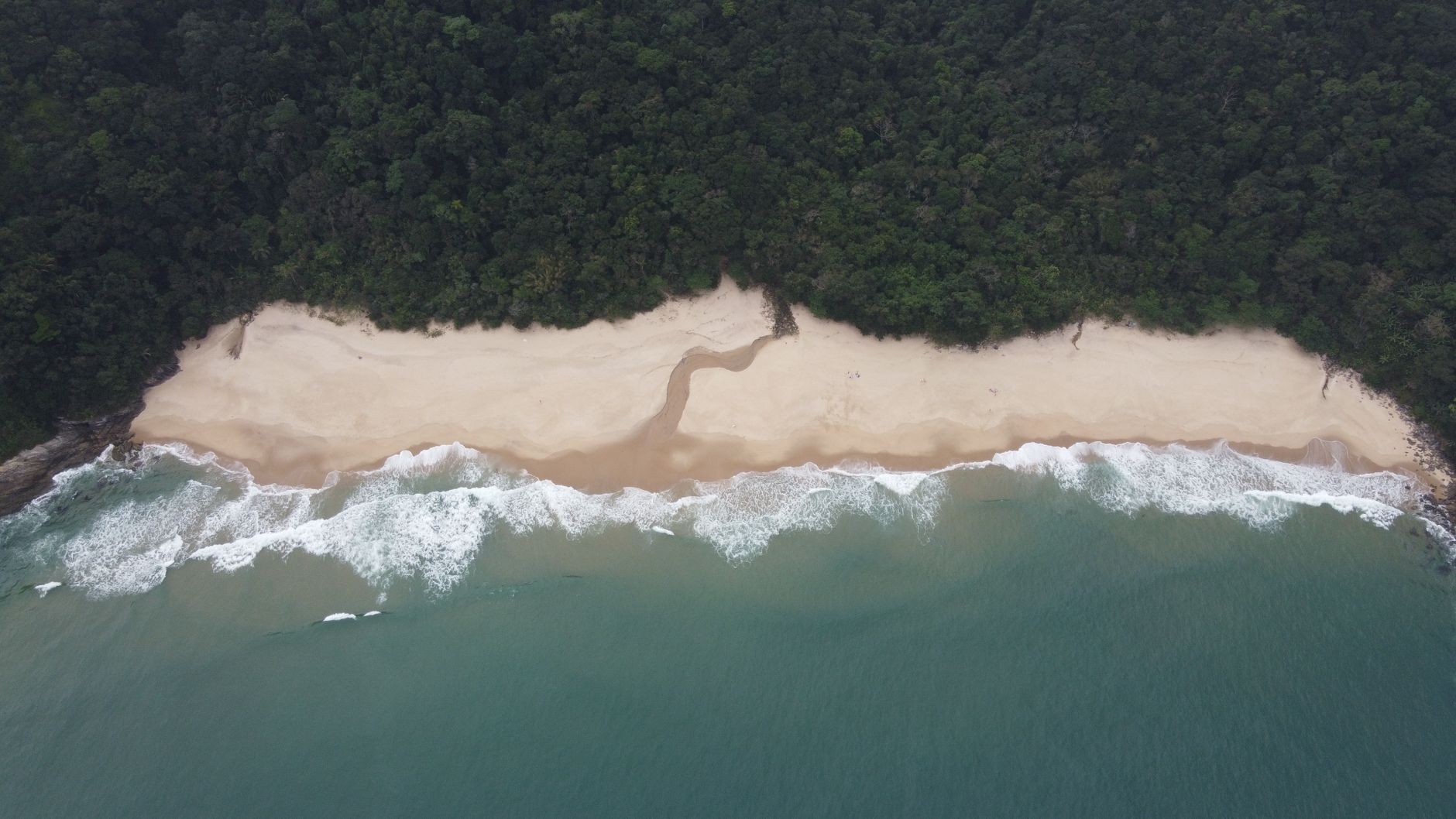
Who Rosa actually suits
Rosa is for people who want a beach village that still feels like a village — dirt roads, no streetlights on most lanes, surfboards drying on wooden decks, and a single stretch of restaurants along Estrada Geral. It suits couples in their 30s and 40s, surfers chasing the Silveira and Rosa Norte swells, and anyone happy to drive or walk everywhere. Nightly rates run R$450-900 at the pousada middle, R$1,200-2,400 at the boutique level, and R$2,800 upwards at the cliffside places with lagoon views. That puts it firmly above Garopaba or Imbituba and roughly on par with Jurerê Internacional, but for a completely different product.
It does not suit families with small children who want a paved promenade and a supermarket downstairs, backpackers on R$150 a night, or anyone without a car who plans to stay more than three nights. Rosa has no bus network inside the village, taxis are scarce after 11pm, and the walk from the top of the hill down to the beach is 25 minutes of unlit sand road. If those trade-offs sound like a chore rather than the point, book Garopaba instead and drive over for a day.
Rosa Norte and the Miolo
Rosa Norte is the northern headland, above Praia Vermelha, and it is where most of the design-forward pousadas sit — timber-and-glass places built into the slope with plunge pools angled at the ocean. Rates here are the top of Rosa's range, R$1,800-3,500 in high season, and you are paying for the view and the quiet. Walking distance to the sand is 10-15 minutes downhill, which is fine going down and honest work coming back up. There are two or three restaurants within a 10-minute walk, but for the main strip you drive or call a car.
The Miolo is the flat middle of the village around the lagoon and the Estrada Geral, and this is the pragmatic choice. You can walk to 15 restaurants, the surf shops, the little market, and the beach access at Rosa Central in under 12 minutes from most pousadas. Rates sit at R$500-1,100 for solid mid-range rooms. It is not the postcard Rosa of clifftop photos, but it is the Rosa where you do not need to plan every meal around a car. First-timers should book here.
Rosa Sul and the lagoon side
Rosa Sul, the southern end above the lagoon, is the surfer's pick and the quiet-honeymoon pick at the same time, which is a strange combination that somehow works. The road down to Praia do Rosa's south end is the least developed, with pousadas set among the pines and a couple of standout restaurants perched on the slope. Rates run R$700-1,600 for the mid to upper range. The walk to the sand is 15-20 minutes and involves a genuine downhill; coming back after lunch in the heat is not fun.
The lagoon side, meaning the pousadas that face inland over Lagoa do Meio or Lagoa do Peri rather than the sea, is quieter still and often 20 percent cheaper for the same build quality. If you want to kayak in the morning and drive to a different beach each afternoon, this side makes sense. If you want to hear waves from your bed, it does not — the surf is a 25-minute walk over the ridge, and you will be doing that walk more than once a day.
Ibiraquera and the outskirts
Ibiraquera is technically its own beach 4km north of Rosa, but plenty of Rosa listings sit along the road between the two, and they get sold as Rosa. Rates drop sharply here — R$300-600 for a decent room — and the beach at Ibiraquera itself is longer, flatter, and better for families with kids who want to actually swim rather than watch surfers. The catch is that you are now 10 minutes' drive from Rosa's restaurants and nightlife, and there is no walking option.
Further out, along the road toward Imbituba, are the cheapest beds in the wider area: simple pousadas at R$220-380 a night, often family-run, sometimes with a pool. These are honest lodgings for people driving through the coast rather than committing to Rosa. If you have never been and want to know what the fuss is about, do not book here — you will spend the trip in the car and leave wondering why anyone recommended the place. Stay closer, pay more, walk everywhere.
What a night really costs
Rosa in low season (May to August, excluding the July school holiday) runs R$350-700 for a mid-range pousada room, which is genuinely good value for what you get — hand-built cabins, breakfast with local cheeses and cakes, often a pool. Shoulder season in March, April and September lifts prices to R$500-950. High season, meaning December 20 to February 15 and Carnival, doubles everything: R$900-1,800 for the same room, with four-night minimums and non-refundable deposits.
Compared to the rest of Santa Catarina, Rosa is expensive. Garopaba 15km north charges R$250-500 for equivalent rooms, Imbituba 20km south is cheaper still, and Florianópolis has options at every level. What Rosa charges for is the setting and the scarcity — the village caps building heights and density, so supply is genuinely limited. If you value that, the premium is fair. If you don’t feel it in the first evening, you booked wrong: check out and drive up the coast.
Within walking distance
From a Miolo pousada, walking distance covers the length of Estrada Geral: sushi at one of the two Japanese places, wood-fired pizza, a couple of seafood restaurants with lagoon decks, an açaí bar, two bakeries doing pão de queijo from 8am, and the surf shops that rent boards for R$60-90 a day. The beach access at Rosa Central is 8-10 minutes on foot. The little market for water, wine and sunscreen is central and open until 10pm in summer, 8pm the rest of the year.
From Rosa Norte or Rosa Sul, walking distance shrinks dramatically. You get your own pousada's restaurant if it has one, maybe one neighbour, and the beach if you commit to the hill. Anything else requires a car or a R$25-40 local taxi ride, and those cars are not always available after 11pm on a weeknight. Plan meals in advance, or eat where you sleep. First-timers consistently underestimate how spread out Rosa is and how dark the roads get.
Booking practicalities
Rosa's better pousadas book out four to six months ahead for December and January, and Carnival often sells out in October. If you are flexible with dates, aim for the second half of November or the first half of March — the weather is reliable, the water is warm enough, prices are 30-40 percent below peak, and you can walk into a restaurant without a reservation. Whale-watching season runs June to November, which changes the calculus if that is why you are coming.
Book directly with the pousada by WhatsApp where possible; many properties give a 10-15 percent discount off the online rate for direct bookings and bank transfer. Confirm what the road to your pousada is actually like — a few of the Rosa Norte places sit at the end of steep sand tracks that a standard rental car will struggle with after rain. Ask specifically, in writing, and if the answer is vague, book somewhere with a paved approach.
Good to know
Questions, answered
Is Praia do Rosa walkable without a car?
Only if you book in the Miolo, the flat middle around Estrada Geral. From there you reach 15 restaurants and the beach in under 12 minutes. Anywhere else in Rosa — Norte, Sul, Ibiraquera — you will need a car or a lot of patience with taxis that thin out after 11pm.
How does Rosa compare to Garopaba for a first visit?
Garopaba is cheaper by 40 percent, has a proper town centre with supermarkets and buses, and better beaches for swimming. Rosa is prettier, quieter, and has better restaurants and pousadas. For a first-time weekend, stay in Rosa. For a week with kids or a tight budget, Garopaba wins.
When is Rosa cheapest without being empty?
Second half of November and first half of March. Water is 22-24C, most restaurants are open, whale season is either just starting or just ended, and rates sit 30-40 percent below December peaks. Avoid June and July unless you specifically want whale-watching and cool evenings.
Doing good is the business: every booking through Stay Santa Catarina funds one verified tonne of carbon removal — same room, same price, no markup.
Start your search