Who this island is for
São Francisco do Sul is an island of about 260 square kilometres off the northern Santa Catarina coast, home to 55,000 people and one of the three oldest towns in Brazil (founded 1504, officially recognised 1658). It has two personalities: the UNESCO-tentative historic centre on the sheltered bay side, and thirteen ocean beaches on the eastern coast. Rooms sit at R$150-350 in the historic centre and R$220-550 on the beaches. It suits travellers who want a mix of colonial architecture and beach days, and who prefer somewhere quieter than the busy coast further south.
It is not the right choice if you want polished tourist infrastructure. English is limited, restaurants close earlier than on the touristed coast, some beaches have thin services, and getting between the historic side and the beaches requires a car or a slow bus. It is also not right if you specifically want surf-culture nightlife; that lives in Praia do Rosa and Garopaba, not here. Come for the history, the working port, the boats, and the beaches with genuinely few people on them most of the year.
Centro Histórico: the colonial waterfront
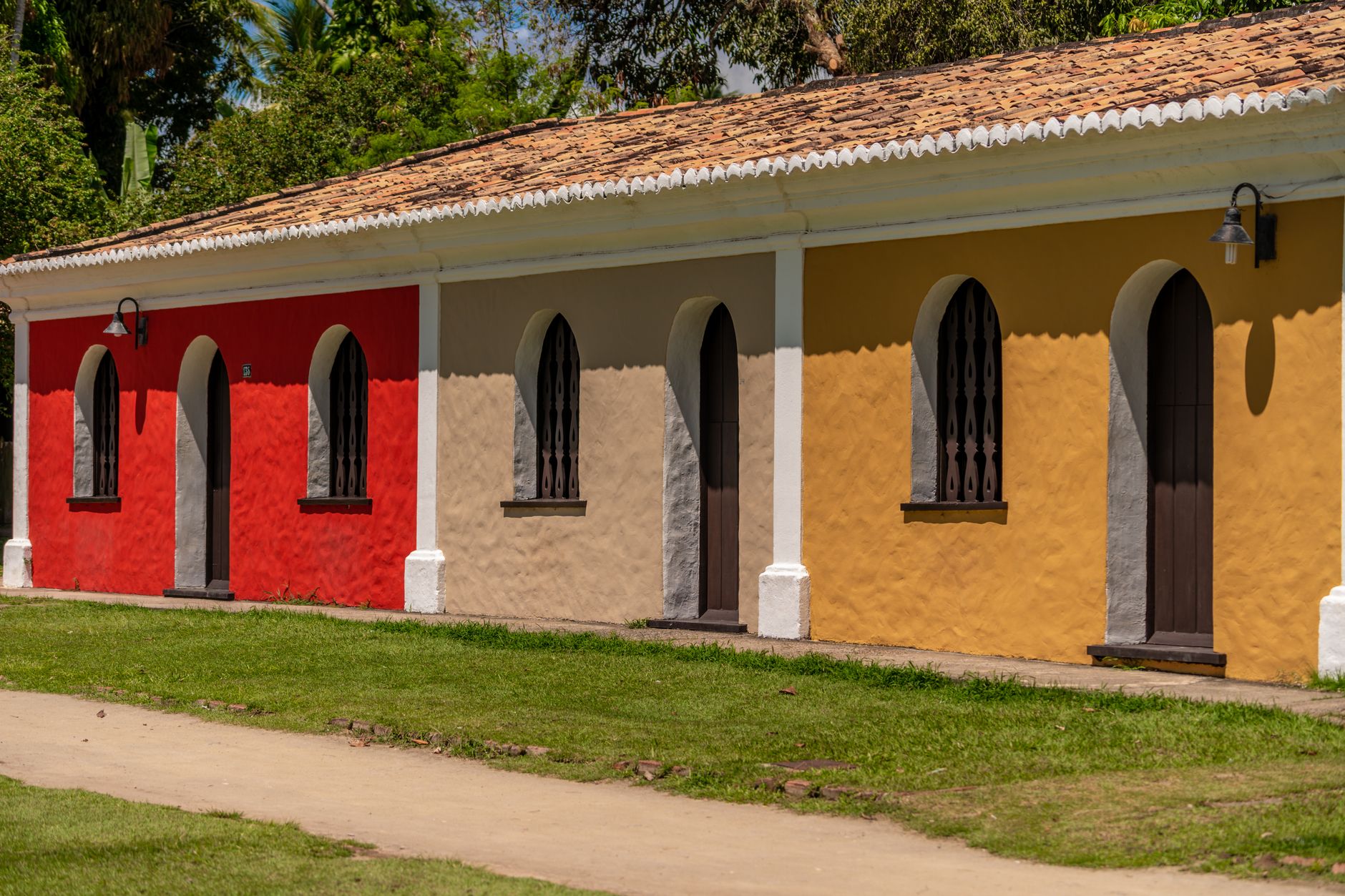
The old town runs along the Baía da Babitonga, a series of 18th and 19th-century pastel facades, cobblestone streets, the Museu Nacional do Mar (housed in an old warehouse and one of the best small museums in the country), and a working ferry pier. Small pousadas in restored buildings sit inside the historic zone at R$220-380 shoulder and R$300-500 peak. This is where you sleep if the point of the trip is the history and the working-town feel. Everything walkable is walkable from here: the museums, the churches, the two dozen restaurants along the front.
The catch is that centro is not a beach neighbourhood; the water in front of it is a bay used by boats, not swimmers. To swim you drive 15-25 minutes to Enseada, Ubatuba or Prainha. Restaurants are decent and some are excellent (the fresh fish at the waterfront tables is the reason to be here), but the town winds down by 10pm even in summer. Book centro for one to three nights of history-focused travel and expect to drive to the beach on day two.
Enseada: the main beach base
Enseada is the busiest beach on the island, a long calm-water bay on the eastern side, backed by a strip of pousadas, ice-cream shops, pizzerias and a small tourist high street. This is where families with children mostly sleep. Rooms run R$220-400 shoulder and R$380-620 peak. The beach itself is safe for swimming, wide, and long enough that even in January you can walk twenty minutes and find quiet sand. Restaurants and beach kiosks stay open until midnight in high season.
It is the right base if you want a beach holiday with the historic town as a day-trip. It is the wrong base if you wanted the historic town as the main event, because you will be driving in and out and Enseada has no historic character of its own. Enseada is also the busiest beach on the island in January — expect it to feel like a proper Brazilian summer beach town, with all the noise and crowds that implies. In shoulder season it is completely different: half-empty and very cheap.
Prainha and Praia Grande: the wilder beaches
North of Enseada, Prainha and Praia Grande face open ocean, with waves, surf schools, and a much smaller tourist infrastructure. Rooms are fewer, more scattered, and cheaper on average — R$180-320 shoulder and R$300-500 peak. This is where the local surfers go, where the sand is wilder and the crowds are thinner. If you want to combine some surfing or bodyboarding with a beach holiday, or if Enseada in January feels like too much, this is the alternative.
The trade-off is thinner services. Restaurants are sparse, no proper supermarket within walking distance of most pousadas, and the road from centro is longer (25-40 minutes). You want a car, and ideally you want to be self-sufficient with a fridge in your room. Praia da Saudade and Praia do Ervino are further out along the same coast and even quieter — that is either a feature or a bug depending on the traveller.
Ubatuba (yes, another one): the compromise
Ubatuba (not the famous São Paulo one, a smaller local beach) sits between centro and Enseada, on a calm bay with a working fishing community, cheap pousadas at R$160-280 and a genuine local scene. It is where a lot of budget travellers end up, either because the historic pousadas are full or because the price gap is real. The beach is calm and shallow, good for children, and the seafood restaurants along the front are cheaper and often better than the tourist places in Enseada.
Book Ubatuba if you want the best value on the island, if you like the fishing-village feel, and if you have a car for exploring both centro and the surf beaches. It is a slightly awkward choice for anyone without transport because there is little to walk to beyond the beach and a few restaurants. But it is a very quiet, very cheap option, and in shoulder season it is one of the best-priced beach beds in the whole state.
What a night costs compared to the region
São Francisco do Sul is cheaper than Bombinhas, Balneario Camboriu or Florianopolis for equivalent standards, roughly on par with Penha and Itajai. A comfortable pousada in centro or Enseada costs R$260-380 in shoulder and R$400-600 in peak, versus R$400-800 for similar rooms further south. Restaurants are 15-25% cheaper: a proper seafood meal with wine runs R$110-180 for two, versus R$150-260 in Bombinhas. If you are on a budget and want history plus beach, this island delivers the best combination in northern Santa Catarina.
Peak season here is shorter and slightly less brutal than at the more famous coastal destinations. December through February is expensive; March gets cheap fast; April to November most pousadas run at half of peak rates and half of them sell weekly or three-night packages that discount further. Carnival week and the New Year window are the two spikes; everything else is manageable with a fortnight's notice. Weekday rates outside peak run 20-30% below weekends.
What is walking distance
From a centro pousada, you walk in five to fifteen minutes to the Museu Nacional do Mar, the Igreja Matriz Nossa Senhora da Graça, the waterfront restaurants, the ferry pier and the artisan shops. You do not walk to any swimmable beach; the nearest is a 15-minute drive to Prainha or a 20-minute drive to Enseada. From an Enseada pousada, you walk the length of the beach (about 4km end to end), and you walk to a dozen restaurants and the small tourist strip.
From Prainha or Praia Grande, walking is limited to that beach and a few nearby restaurants; a car is essentially required. From Ubatuba, you walk the small beach and about half a dozen fish restaurants. The island bus service exists but runs infrequently (every 40-90 minutes in shoulder season) and does not connect all zones directly. Renting a car in Joinville and driving over the bridge is by far the most common way visitors handle transport, and it makes the island genuinely enjoyable.
Good to know
Questions, answered
How do I get to Sao Francisco do Sul?
Drive from Joinville (45-60 minutes) or from Curitiba (2.5 hours), or take a Catarinense bus from either. There is no airport on the island. Most visitors arrive by car via the bridge on BR-280. The historic ferry across the bay from São Chico to the mainland still runs but is a scenic experience, not a practical commute.
Is the historic centre really worth the trip?
Yes, if you have any interest in colonial architecture, maritime history or working ports. It is small (a couple of hundred metres of restored front, plus side streets) but genuinely atmospheric and much less touristed than Paraty or Olinda. Half a day covers the museums and lunch; sleeping there adds the evening light on the water, which is the best part.
Which beach should I pick if I only have one day?
Enseada if you want easy swimming, restaurants and services. Prainha if you want the more scenic beach with some waves and fewer people. Skip the far-north beaches (Ervino, Saudade) for a single-day visit — they are quieter but require more driving than they deserve on a short trip.
Doing good is the business: every booking through Stay Santa Catarina funds one verified tonne of carbon removal — same room, same price, no markup.
Start your search