PIX changes everything
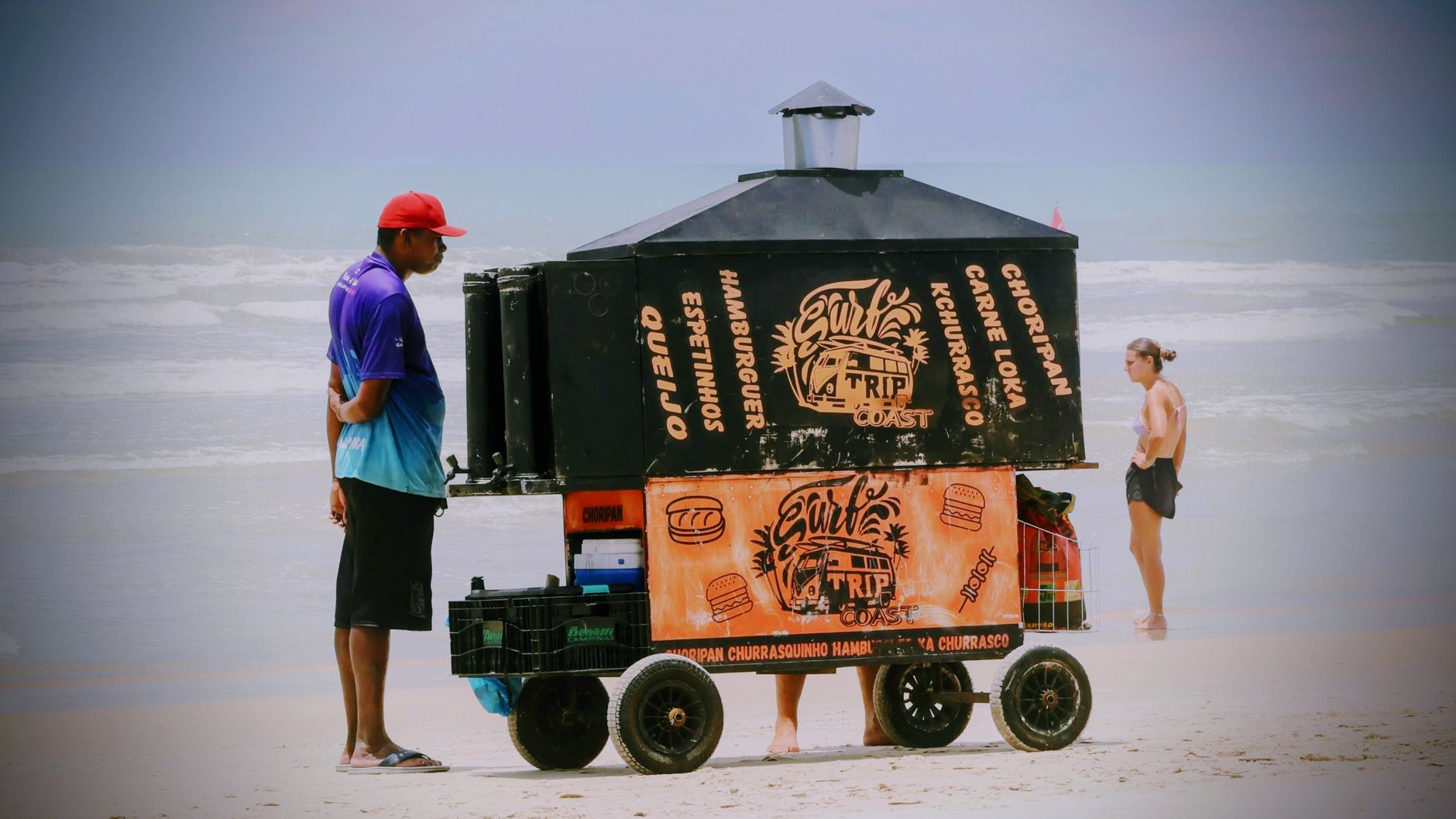
PIX, Brazil's instant transfer system, has become universal. Even beach kiosks post a QR code. If your bank issues a Brazilian PIX key (some digital banks like Wise and Nomad do), you save 3-5 percent versus card. Otherwise, use a no-foreign-fee credit card — Visa and Mastercard both work everywhere. Bring R$300-R$500 cash for tolls, small vendors, and the occasional Serra Catarinense pousada that still prefers cash. American Express is rarely accepted outside upscale resorts, so don’t rely on it as a backup. Contactless tap-to-pay is now standard at supermarkets and pharmacies in Florianópolis, though many small kiosks still ask for PIX or cash only.
Travelers staying more than a week should set up a Wise or Nomad account before departure, since activating a Brazilian PIX key can take 24-48 hours and is awkward to arrange once you’re already moving between Lagoa da Conceição and Bombinhas. ATM withdrawals at Banco do Brasil or Santander machines typically add R$15-R$25 per transaction on top of your home bank's own fee, and most machines cap a single withdrawal at R$1,000-R$1,500, so plan on two trips if you need more. Keep the PIX key linked to a debit account rather than credit, since some merchants reject PIX requests tied to a foreign credit line. Over two weeks on the coast, R$150-R$200 in cumulative ATM fees is realistic even for a careful traveler.
Tipping culture
Restaurants automatically add 10 percent as taxa de serviço, listed on the bill. Legally optional, socially expected — leave it unless the service was truly bad. No additional tip needed. Uber and taxi drivers are not tipped. Hotel bag porters: R$5-R$10 per bag if you use them. Boat tour guides: R$20-R$50 per couple at end if the trip was good. Don’t over-tip; it distorts local expectations. Bartenders at beachfront kiosks in Praia Mole or Jurerê rarely expect anything beyond rounding the bill up to the nearest note. Freelance guides for hikes like the Lagoinha do Leste trail appreciate R$20-R$30 per person, since they set their own rates and receive no service charge from anyone.
Hairdressers and manicurists generally receive the same 10 percent if it isn’t already built into the price, though many small-town salons in the Serra Catarinense simply round the total up. Delivery riders through apps like iFood are tipped in-app rarely, but handing over an extra R$5 on a rainy-night delivery is appreciated, not expected. All-inclusive resorts sometimes fold gratuities into the daily rate, so check your booking confirmation before tipping housekeeping twice. At churrascarias, the 10 percent service charge covers the rodízio waiters circulating with skewers, so there's no need to tip per cut of meat served. If unsure, watching what the table beside you leaves is a reliable local cue.
What things actually cost
Coffee at a padaria R$4-R$6. Pão na chapa breakfast R$7-R$10. Prato feito lunch R$22-R$32. Mid-range restaurant dinner for two R$180-R$260 with drinks. Local beer 600 ml R$14-R$18 at a bar. Coconut on the beach R$10. Movie ticket R$32. Uber across Florianópolis R$25-R$55. A dozen oysters in Ribeirão da Ilha R$60-R$85. A rental car R$130-R$220/day. Nothing catastrophic if you eat where locals eat. A caipirinha at a casual bar runs R$16-R$22, while the same drink at a Jurerê Internacional beach club can double to R$35-R$45. Sunscreen is taxed heavily in Brazil, so a small bottle of reef-safe sunscreen can cost R$45-R$60 at a pharmacy near the beach.
Day-trip costs add up faster than meals: a round-trip boat to Ilha do Campeche from Barra da Lagoa runs R$70-R$90 per person, and a full day at Beto Carrero World in Penha costs R$220-R$260 for an adult ticket bought online. A prepaid SIM card with 20GB of data costs about R$40-R$60 at the airport kiosk, noticeably cheaper at a shopping mall counter downtown. Self-service laundry near hostels in Barra da Lagoa charges R$25-R$35 per load, wash and dry included. Renting a beach chair and umbrella for the day from a kiosk on Praia Mole or Praia dos Ingleses costs R$30-R$50 for the pair, often waived if you order food and drinks from the same kiosk.
Where your nightly budget actually goes
Budget travelers sleeping in dorms at H70 Hostel 70 Floripa or Hostel Do Morro pay R$60-R$120 a night for a bed, breakfast usually included, with shared bathrooms and a kitchen for self-catering. One step up, simple pousadas like Pousada Korb, Pousada Ilha Faceira, and Pousada Jurerê charge R$180-R$350 for a private double, often with a fan rather than air conditioning and a five-to-ten-minute walk to the sand. This tier is where most independent travelers land, and it's the sweet spot for value: clean, family-run, and close enough to a beach kiosk for breakfast on the sand.
At the top end, beachfront resorts such as Jurerê Beach Village, IL Campanario Villaggio Resort OFICIAL, and Costa Norte Ingleses charge R$450-R$900 a night in high season, dropping by a third or more between April and November. Business-oriented hotels in downtown Florianópolis — Mercure Florianópolis, Blue Tree Premium Florianopolis, and Majestic Palace — sit in between at R$300-R$500, and suit anyone prioritizing a central location over beach access. Whichever tier you choose, book pousadas directly rather than through a platform: many quietly offer a 5-10 percent discount for a PIX transfer instead of a card payment, since the platform's commission disappears.
ATMs, exchange offices, and avoiding hidden fees
Casas de câmbio cluster around Rua Felipe Schmidt in downtown Florianópolis and inside Floripa Shopping, and they post rates that are 2-4 percent worse than the interbank rate you’ll see online. It's rarely worth bringing foreign cash to exchange unless you arrive with a currency an ATM won’t dispense against, since withdrawing directly from a Brazilian ATM with a no-foreign-fee card almost always beats a currency exchange counter. Confirm with your home bank before travel that Brazilian ATM withdrawals aren’t blocked as a fraud flag; a quick call avoids a frozen card on day one in Canasvieiras or Bombinhas.
At the ATM itself, always decline the dynamic currency conversion prompt that offers to charge you in your home currency instead of Brazilian reais — it applies a poor exchange rate on top of your bank's own fee, effectively charging twice. Withdraw the maximum allowed in one go to minimize the flat per-transaction fee, and use machines inside a bank branch during business hours rather than a standalone airport machine, which tends to charge more and run out of notes on weekends. Floripa Airport's arrivals hall has a Banco do Brasil machine that's reliable early morning but often empty by evening.
High season versus low season pricing
Prices in Santa Catarina swing hard with the calendar. Late December through Carnaval in February is peak season, when pousada rates in Canasvieiras, Jurerê, and Bombinhas can double or triple compared to May, and restaurants near the sand quietly print a separate summer menu with higher prices. Booking three to four months ahead is standard for anything decent over New Year's Eve, when Florianópolis fills with visitors for the fireworks along Avenida Beira-Mar Norte. If your dates are flexible, shifting a trip to early December or late February keeps beach access and warm water while avoiding peak rates by 20-30 percent.
The cheapest, calmest window is the Southern Hemisphere winter, June through August, when many beachfront kiosks and some pousadas in smaller towns like Governador Celso Ramos close entirely, but hotel rates in Florianópolis and Balneário Camboriú drop by half and restaurants are empty enough to walk into without a reservation. Serra Catarinense towns like São Joaquim flip this pattern, charging their highest rates in July for frost and occasional snow tourism. Shoulder months — April, May, September, and October — offer the best balance of open businesses, mild weather, and rates roughly 30-40 percent below the summer peak.
Common money mistakes visitors make
The most common mistake is assuming every business takes cards; small bakeries, beach vendors, and toll booths on the BR-101 sometimes only take cash or PIX, and a stranded traveler with only a foreign credit card can lose twenty minutes hunting for an ATM. The second is not notifying your bank before travel, which gets a card blocked on the first Brazilian transaction and can take a frustrating international phone call to unblock while standing at a Canasvieiras supermarket register. The third is changing money at the airport counter out of jet-lagged convenience — the rate is reliably the worst in the state, worse even than a downtown casa de câmbio.
Overtipping is a subtler mistake: leaving 20 percent on top of an already-included 10 percent service charge doesn’t buy better service, it just resets expectations for the next foreign visitor. Renting a car and assuming fuel is priced like groceries also catches people out — gasoline runs R$5.90-R$6.40 a liter, noticeably higher than diesel, and a full tank on a compact rental can run R$250-R$300. Finally, don’t wait until you’re at Beto Carrero World or a boat tour desk to discover cash-only pricing; check payment methods when you book, since many tour operators outside Florianópolis's center still run on cash and PIX alone.
Good to know
Questions, answered
Is Brazil expensive?
Cheaper than Argentina, Chile, or Uruguay in 2024. Roughly on par with rural Mexico for meals; imported goods are pricier.
Do I need cash at all?
A little — R$300-R$500 for tolls, beach parking, and small vendors. Otherwise, cards work everywhere.
Where do I get cash?
Banco do Brasil, Bradesco, and Santander ATMs at the airport and shopping malls. Avoid Banco24Horas — highest fees for foreign cards.
Is haggling normal?
Not in restaurants or shops. At craft markets and for longer pousada stays, a polite ask for tarifa PIX or a weekly rate is fine.
Should I tip in US dollars or euros?
No — tip only in reais; Brazilian staff can’t easily deposit foreign cash and most banks charge steep fees to convert small bills. Withdraw reais from an ATM and tip in local currency, even if it means breaking a large note at a padaria first.
What's the best card to bring?
A no-foreign-transaction-fee Visa or Mastercard from your home bank covers nearly every restaurant, pousada, and shop; Amex is accepted only at upscale resorts. Pair it with a Wise or Nomad card loaded with reais if you want PIX access for kiosks and markets. Carrying two cards from different networks is smart in case one is declined at a rural gas station.
Doing good is the business: every booking through Stay Santa Catarina funds one verified tonne of carbon removal — same room, same price, no markup.
Start your search