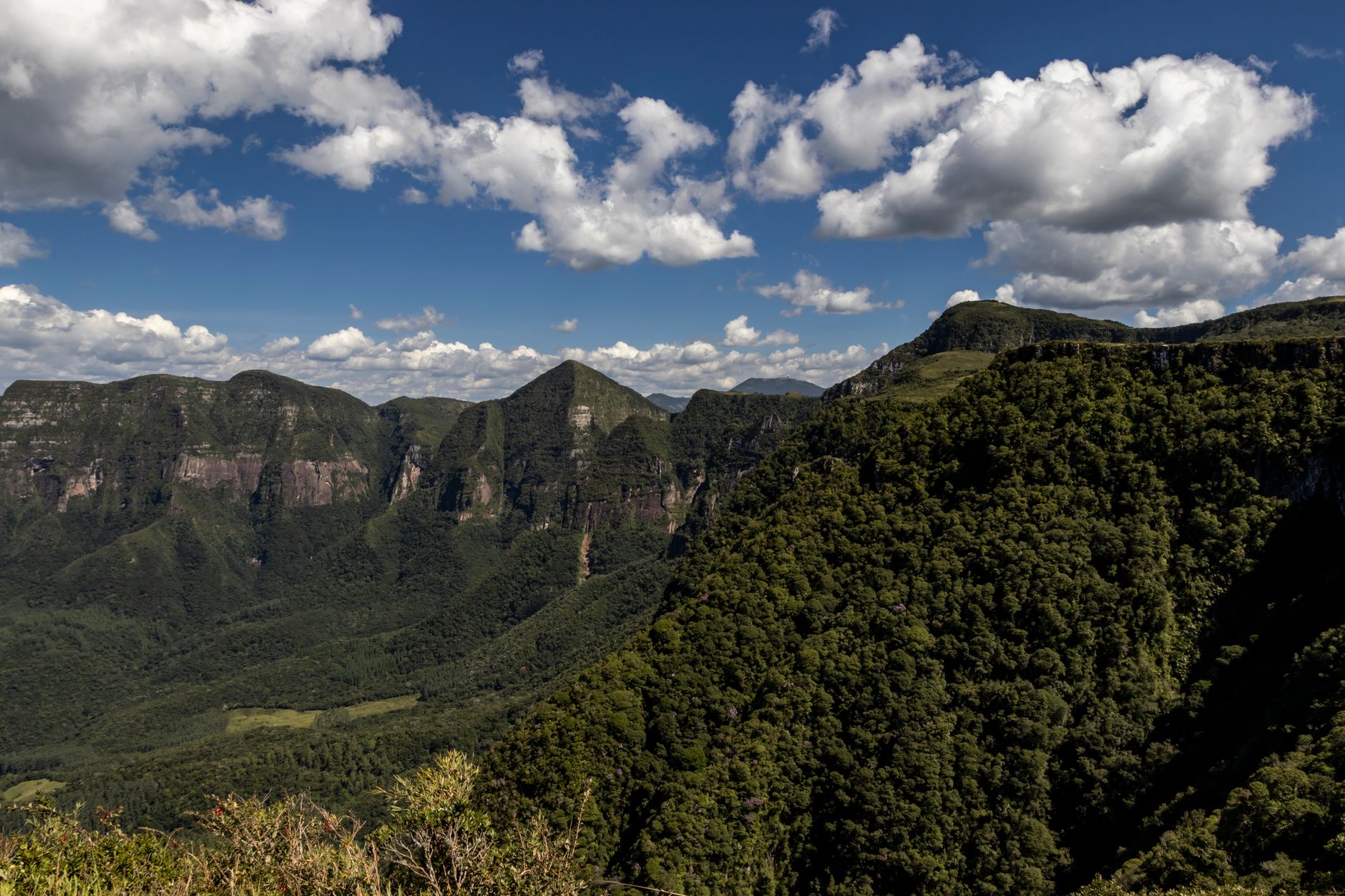
Day 1: Florianopolis to Urubici via Alfredo Wagner
Leave Florianopolis by 8am on BR-282 west. The road is dual carriageway to Sao Jose, then single lane and busy with trucks to Rancho Queimado at km 60. Stop for coffee and morcilha at one of the roadside colonial-style bakeries on the town's main strip — the ones with wood-fired ovens behind the counter, not the petrol-station chains. From Bom Retiro the road climbs seriously: 900 metres of altitude in 40 km of switchbacks known locally as the Serra do Rio do Rastro's little sister. Temperatures drop 8-10C on this stretch even in summer. Total drive time 4h30 with stops.
Arrive Urubici for a late lunch at a rural restaurant serving trout — the town farms rainbow trout in cold-water tanks and every menu has it grilled, breaded or in ravioli. Budget R$70-95 a head with a glass of local wine. Afternoon: drive 18 km up to Morro da Igreja and the Pedra Furada viewpoint (open until 5pm, entry R$30), Brazil's most-photographed rock arch. Sleep in Urubici itself in a mid-range pousada in the R$380-520 band; the cheaper options at R$180-240 sit on the BR-282 approach and are fine but noisy.
Day 2: Urubici waterfalls and the road to Sao Joaquim
Morning is for waterfalls. The Cascata Vu do Segredo needs a 40-minute walk in and charges R$25 at the farm gate; Cascata do Avencal is drive-up with a lift down the cliff for R$45 and takes an hour. Do one, not both, unless you skipped Pedra Furada. Back in town by 12.30 for a bakery lunch — the German-Italian influence means good sourdough and cured meats for R$25-35 a plate. Fuel up before leaving: Urubici's two petrol stations are cheaper than anything in Sao Joaquim, and the SC-430 has no services for 62 km.
The SC-430 to Sao Joaquim runs through apple orchards and is one of the prettiest 90-minute drives in the south, particularly April-May when leaves turn. Sao Joaquim itself is a working town, not a tourist one — expect functional pousadas at R$260-380 rather than boutique charm. The reward is what's around it: the Santa Augusta and Villa Francioni wineries sit within 12 km and both do afternoon tastings for R$60-120 including four pours. Book ahead in July-August when Brazilians arrive hunting snow. Sleep in Sao Joaquim centre for walkable dinner options.
Day 3: Serra do Rio do Rastro and the descent to Laguna
This is the day the route earns its reputation. Leave Sao Joaquim at 9am for Bom Jardim da Serra, 35 km east on SC-390. The Mirante da Serra do Rio do Rastro sits at 1,460 metres and looks over 284 hairpin bends dropping to the coastal plain. Arrive before 11am — after that, tour buses fill the small car park and the light flattens. There's a cafe at the mirante with fair coffee at R$12 and overpriced souvenirs. Give the viewpoint 40 minutes and then drive the descent itself, slowly, in second gear. The road surface is good but the drop-offs are unfenced in places.
At the base, in Lauro Muller, you’re back in sub-tropical heat. Push on to Laguna for lunch (2h from the mirante including the descent) and eat seafood on the waterfront — grilled fish and a beer for R$85. Afternoon: the historic centre is a small 18th-century colonial grid worth 90 minutes on foot, and the Farol de Santa Marta lighthouse sits 18 km south down a partly unpaved road. Sleep in Laguna old town in a converted colonial house at R$320-480, or push 30 minutes north to Garopaba for a beach base at R$450-650.
Day 4: The coast road back to Florianopolis
The temptation on day 4 is to hammer up the BR-101 in 2 hours. Don’t. Take the coastal SC-434 and SC-100 through Garopaba, Praia do Rosa, Imbituba and Guarda do Embau — a 4-hour drive with three swim stops turns the return leg into the trip's best beach day. Rosa has the prettiest headland walks; Guarda do Embau has the river-mouth crossing where you pay R$8 for a boatman to punt you across to the beach. Pack a swimsuit accessible in the car, not buried in the boot.
Lunch at a beach shack in Guarda or Silveira: fried shrimp, rice, farofa and beer for R$70-90. Reach Florianopolis by late afternoon via the SC-405 back road into Campeche, avoiding the BR-101 toll and the Sao Jose traffic. Total loop distance: 720 km, roughly R$380 in fuel for a small petrol car, plus R$45 in tolls and around R$220 in viewpoint and waterfall entries. If you’re flying out the same evening, budget 90 minutes from Campeche to Floripa airport including drop-off; sleep near Lagoa da Conceicao if you have a morning flight.
What to skip on this loop
Skip the wineries at Sao Joaquim if you’ve done Vale dos Vinhedos in Rio Grande do Sul — the scale here is a fraction and the prices similar. Skip the Cascata do Avencal lift if you have working knees: the R$45 saves 15 minutes on a 30-minute round trip that's part of the point. Skip staying in Bom Jardim da Serra unless you specifically want to see the mirante at sunrise — the town has three pousadas, all overpriced at R$450+ because they’re the only options for people chasing the light.
Skip Treze Tilias on this itinerary. It's a lovely Tyrolean-themed town but sits 3 hours north-west of Sao Joaquim and doesn’t fit a 4-day loop without gutting one of the other days. If Treze Tilias is a must, do a separate week combining it with Joinville and Blumenau. The Serra loop works because it's tight — Urubici, Sao Joaquim and the Rio do Rastro descent are all within 90 minutes of each other, and the coastal return is a bonus, not a compromise.
Fuel, tolls and driving conditions
Petrol prices in the Serra run 8-12% higher than in Florianopolis — R$6.20 versus R$5.60 a litre in early 2026. Fill up in Sao Jose or Palhoca before starting, then again in Urubici (cheaper than Sao Joaquim), then Lauro Muller on the descent. The BR-282 has one toll plaza at Rancho Queimado (R$14 each way) and the SC-390 is toll-free. Roads are paved throughout the loop; the only unpaved sections are the last 4 km to Farol de Santa Marta and some farm-track detours to smaller waterfalls that you can skip.
In winter (June-August) frost is common overnight in Urubici and Sao Joaquim, and the Rio do Rastro road occasionally closes for a few hours after snow — check the Policia Rodoviaria Estadual social media the morning you drive it. Summer (December-February) brings afternoon thunderstorms that make the descent genuinely dangerous; do that leg before 1pm. A small hatchback is fine — no need for 4WD unless you plan gravel side-roads to remote waterfalls, in which case a compact SUV at R$180-220 a day from the airport pays off.
Where to sleep, night by night
Night 1 (Urubici): stay in a mid-range pousada on the road to Morro da Igreja, 3-5 km out of town. You get pine-clad rooms, a wood stove, breakfast with local cheese and jam, and quiet. R$380-520 for a double. The in-town options are cheaper (R$220-320) but the traffic noise from BR-282 trucks starts at 5am. Avoid the R$180 rock-bottom pousadas unless you’re truly budgeting — heating matters here from May to September.
Night 2 (Sao Joaquim): centre of town for walkable dinner, R$260-380 a double at a family-run pousada. Night 3 (Laguna or Garopaba): Laguna old town at R$320-480 for colonial character, or Garopaba beachfront at R$450-650 in summer, R$280-380 off-season. If you want one splurge on the trip, put it on night 3 in Praia do Rosa at a headland pousada — R$700-1,100 buys ocean views and a properly heated pool, and it turns a driving trip into a proper holiday.
Good to know
Questions, answered
Can you do this loop in 3 days instead of 4?
Yes, but you drop either the Urubici waterfalls or the coastal return. The tightest 3-day version is Floripa-Urubici (day 1), Urubici-Sao Joaquim-Rio do Rastro-Laguna (day 2, hard driving), and Laguna-Floripa via coast (day 3). It works but you’ll spend 6-7 hours behind the wheel on day 2.
Is a rental car essential for the Serra?
Yes. There are no scheduled buses between Urubici, Sao Joaquim and Bom Jardim da Serra that fit a tourist's timing, and taxi transfers between them cost R$180-280 per leg. Total car rental for 4 days plus fuel and tolls runs R$1,100-1,400 for two people, which is cheaper than piecing it together.
When does it snow in Sao Joaquim?
Snow falls roughly 2-4 times a year, almost always between mid-June and late August. It rarely settles for more than 24 hours. If snow is the goal, base yourself in Sao Joaquim from July 5-25, watch the forecast, and be ready to move fast — it's a chase, not a booking.
Doing good is the business: every booking through Stay Santa Catarina funds one verified tonne of carbon removal — same room, same price, no markup.
Start your search