Who São Joaquim suits
São Joaquim sits at 1,415m in the Serra Catarinense, and it is Brazil's coldest inhabited town — 30-40 frost nights a year, snow in most winters, and the country's only serious commercial apple industry and a growing high-altitude wine scene. It suits wine travellers, road-trippers doing the Serra loop, cold-weather curious Brazilians, and anyone who has done Santa Catarina's coast and wants the opposite. Nightly rates are among the state's most reasonable: R$260-500 for good mid-range, R$650-1,300 for the boutique wine-estate pousadas.
It does not suit beach travellers, families with very young children who need indoor entertainment (there is almost none), or anyone without a car. The town itself is small, functional and low on charm — the appeal is in the estates and landscape outside it. If you have picked São Joaquim expecting cobbled streets and half-timbered houses, you have picked wrong and want Treze Tílias instead. If you have picked it for wine, apples and altitude, you have picked right.
The town centre
Downtown São Joaquim is a grid of about 15 blocks around Praça João Ribeiro, with maybe a dozen restaurants (churrasco, Italian, and a couple that do the local specialities properly), two hotels of the older commercial-traveller type, and half a dozen simple pousadas. Rates in town are cheap: R$180-320 for a clean room with heating, R$300-450 for something nicer. If your priority is walking to dinner without driving at night on frost-covered roads, in-town is the sensible choice.
The catch is that in-town lodging misses the whole point of São Joaquim, which is landscape. You are in a valley, you have no view, and the buildings around you are unremarkable 1980s and 1990s stock. It works well as a one-night stop en route between the coast and Rio Grande do Sul, or as a base for someone who wants to eat and sleep cheaply and drive out to the sights each day. It does not work as a destination in itself.
The wine estates
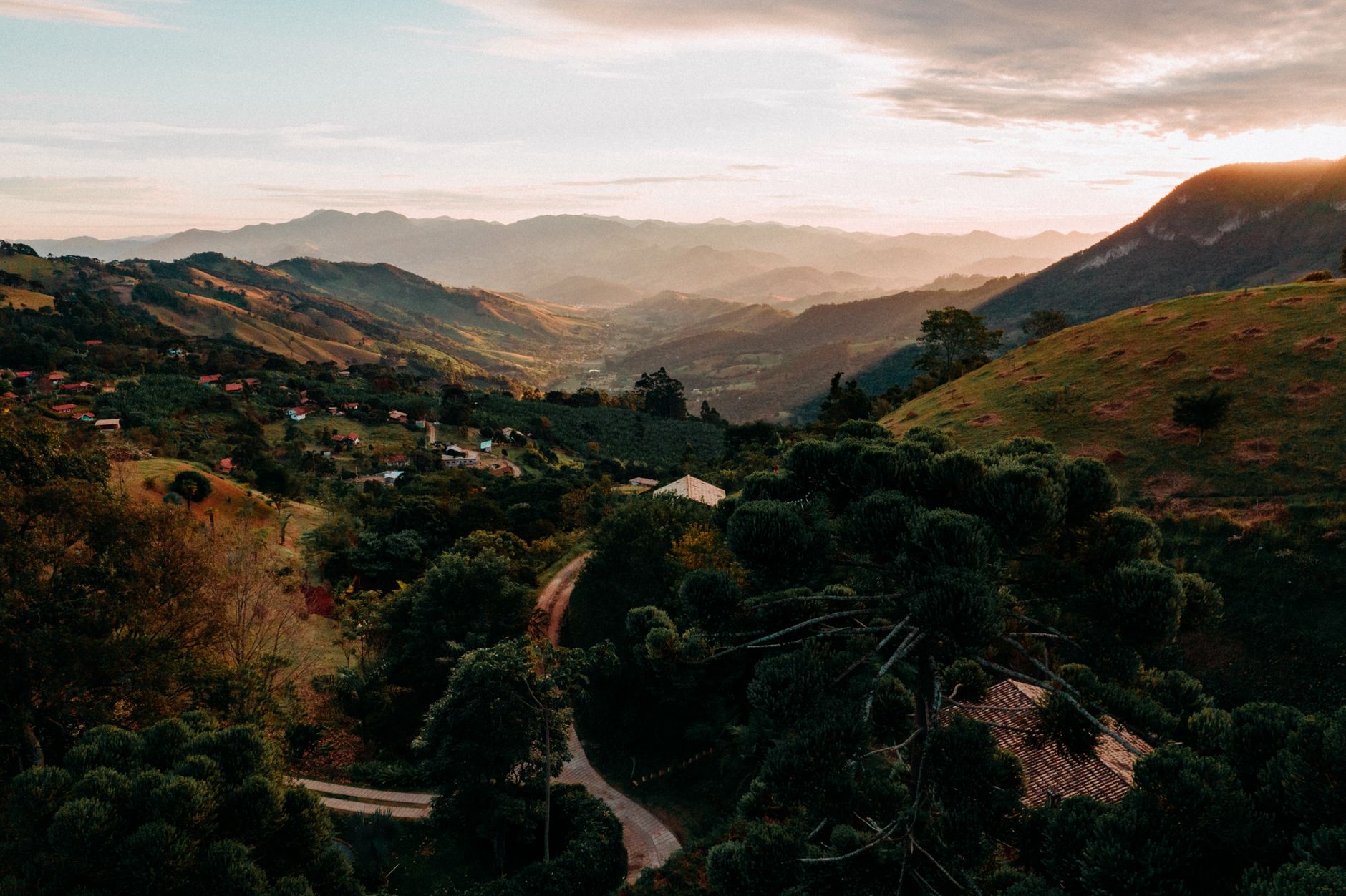
Twelve to fifteen wineries operate around São Joaquim at 1,200-1,400m elevation, and a growing number offer lodging on-site — winemakers' cabanas, converted farmhouses, or small purpose-built pousadas set among the vines. This is São Joaquim's best experience. Rates run R$700-1,500 a night, usually including breakfast and often a bottle of house wine, with tastings and vineyard tours arranged from your door. You are on the estate, you can walk into the vines at dusk, and dinner is either at the winery restaurant or a 10-20 minute drive.
The two main wine areas are along the road to Bom Jardim da Serra south of town, and up on the Coxilha Rica plateau north-east. Both need a car. Some estates require reservations 3-4 months ahead for the January and July peaks, but shoulder-season (April-June, September-November) availability is usually good with two weeks' notice. Ask whether the estate provides dinner on-site — the ones that do save you a cold night-time drive back after tasting three or four wines.
The apple-country pousadas
Around Vila Maria and Bom Retiro, north and east of town, the landscape switches from vineyards to apple orchards, and a different kind of rural pousada operates here — often family farms diversifying into tourism, with simpler rooms, home-cooked meals, and rates 30-40 percent below the wine estates. R$400-700 gets you a proper rural experience with apple picking in season (February-April), tours of the packing sheds, and the kind of enormous farm breakfast that has cheese, ham, four kinds of bread and cake on the same table.
This cluster suits families and slower travellers better than the wine estates, which lean more toward couples. Kids can meet horses, chickens and cows, and the farms are not precious about it. What you sacrifice is scenery — apple orchards are less photogenic than vineyard slopes — and evening options, because the road back into town takes 25-40 minutes and most guests eat at the farm. Ask specifically about heating; some older farmhouses run cold at night.
What a night really costs
São Joaquim's price calendar mirrors Urubici's — peak in July's winter school holiday, secondary peak in January, cheap in shoulder months. July high-season rates run R$400-800 in town, R$900-1,700 on wine estates. January is 15-20 percent below that. Shoulder months (April-June and September-November) drop rates to R$260-450 in town and R$550-1,000 on estates, which is genuinely good value for what you get — a room on a working winery in one of Brazil's smallest wine regions.
Compared to the coast, São Joaquim is cheaper than Rosa by half and roughly matched with Garopaba and Imbituba for equivalent quality, but for a completely different holiday. Compared to Gramado across the border in Rio Grande do Sul, São Joaquim is 30-40 percent cheaper and considerably less touristed. The main hidden cost is the drive: 4.5-5 hours from Florianópolis, and you will use a lot of fuel getting around, because everything worth doing is 10-30km apart on winding roads.
Within walking distance
From a central São Joaquim pousada, walking distance covers 10-12 restaurants, two supermarkets, the pretty parish church, and one or two bakeries doing proper morning cucas. That is about it. The town does not have a bar scene worth naming, and shops close early even in summer. If you have picked São Joaquim, you have not picked it to walk around — you have picked it to drive to wineries and viewpoints and canyons, and eat where you sleep or nearby.
From a wine estate or apple farm, walking distance is your host's property — often 5-50 hectares of it, with trails through vines or orchards, sometimes a small dam or river. This is genuinely enjoyable in the early morning and at dusk, and it is what you are paying for. Do not expect to walk to a neighbour's restaurant; the road distances are wrong for that even where the map makes it look close. Drive, or eat in.
How to combine it
The classic Serra Catarinense loop is Florianópolis-Urubici-São Joaquim-Bom Jardim da Serra (for the Serra do Rio do Rastro drive)-back to the coast, five to seven nights total. São Joaquim's slot in that loop is two or three nights: one for the wineries, one for apple country or a longer drive, and if you have a third, one for the drive south to the Rio do Rastro viewpoint and Cambará do Sul across the state line if you want the Aparados da Serra canyons.
Do not attempt São Joaquim without a car, do not attempt it as a day trip from the coast (the drive is too long each way), and do not plan the trip for June's first fortnight when many wineries close briefly for pruning. February and March are excellent for apple harvest, April and May for autumn colours on the vines, July for cold and possibly snow. Book estate stays 8-10 weeks ahead for peaks, two to three weeks for shoulder.
Good to know
Questions, answered
Are São Joaquim wines actually good?
The high-altitude reds — especially Malbec, Cabernet Sauvignon and Merlot from vines at 1,200-1,400m — are the region's strength, and several estates now win national medals regularly. Sparkling is also good. Expect to pay R$80-180 a bottle at the winery for the drinkable ranges and R$200-400 for reserves. It is a young wine region; it is not Mendoza yet, but it is real.
São Joaquim or Urubici for two nights only?
Urubici, if you want dramatic landscape and hiking. São Joaquim, if you want wine and a slower pace. If you can only do one, Urubici has more visual variety and more to see on foot at the attractions. But if wine matters to you, San Joaquim wins and Urubici's canyons will feel one-note.
Do I need snow chains in winter?
Very rarely, and most rental cars don’t come with them. What you actually need is a rear-wheel-drive avoidance strategy (rent front-wheel or all-wheel), the discipline to not drive on frost-covered roads before 9am, and to check whether your rural pousada's access track is paved or dirt. Ask before booking if you’re arriving in July.
Doing good is the business: every booking through Stay Santa Catarina funds one verified tonne of carbon removal — same room, same price, no markup.
Start your search