
 ★ 4.0
★ 4.0Santa Catarina's biggest city — industrial, planned, functional. Dance festival in July, one of Brazil's best ballet schools.
Joinville is the largest city in Santa Catarina — 600,000 people, industrial base, planned German-immigrant grid downtown, and a genuine claim to being the ballet capital of Latin America (the Bolshoi's only overseas school operates here, and the Festival de Dança de Joinville each July fills every hotel within 50 km). It's not a tourist city; it's a working city that occasionally hosts big events. Cheaper than Balneário, boring at night, and useful mostly as a base or transit point.
Reasons to stop: the Festival de Dança (usually the last two weeks of July), a business trip, or breaking a drive between Curitiba and the Santa Catarina coast. The downtown has a decent 90-minute walking loop — the Cathedral, Rua das Palmeiras with its royal palm avenue, the Cemitério dos Imigrantes, and the Museu Nacional de Imigração e Colonização. Nothing spectacular, but honest. Skip if you’re looking for beaches, colonial charm or nightlife. Go 45 minutes east to São Francisco do Sul for coastal history instead.
At 9pm the centre is quiet enough that you notice it — a few bars around Rua do Príncipe with beer at R$10–R$14, workers heading home, almost no one strolling for the sake of it. This is a city that runs on factory shifts and civil-service hours, not tourism, and it shows in what closes early and what never bothers opening at all. If you want evening life, plan to be in Balneário Camboriú or Florianópolis by nightfall; Joinville is for daytime business.
It suits business travellers, festival-goers booking a year ahead, and road-trippers splitting the Curitiba–Florianópolis run who want a real bed rather than a highway motel. It does not suit anyone chasing beaches, colonial streetscapes or nightlife — for that, drive on. Families with a dancer in the house sometimes build an entire July trip around the festival and treat the city itself as background scenery, which is roughly the correct way to see it.
Where to stay in Joinville
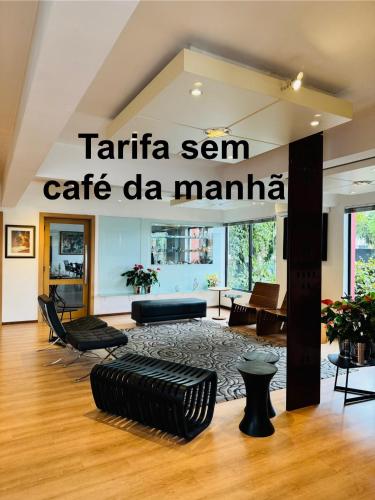
The Centro (downtown), bounded by Rua Princesa Isabel and Rua do Príncipe, is the walkable base — business hotels at R$180–R$320 outside festival dates, R$450–R$800 during the July dance festival with 3-night minimums. The América neighbourhood immediately south of downtown has better mid-range options at R$220–R$380. Avoid Zona Industrial and Boa Vista — cheap but 20 minutes from anything you want to see. Anita Garibaldi (upmarket, north of centre) has good hotels but you need a car. For a reliable business-standard stay within walking distance of the Cathedral and Rua das Palmeiras, the Bourbon Convention Hotel Joinville is the pick — book it three to four months ahead if your dates touch July, since festival demand absorbs the whole city's inventory fast.
Where to sleep
Hotels in Joinville
Real, top-reviewed rooms — booked at the same live rate through app.impt.io, one tonne of carbon removed per stay.
★ 4.0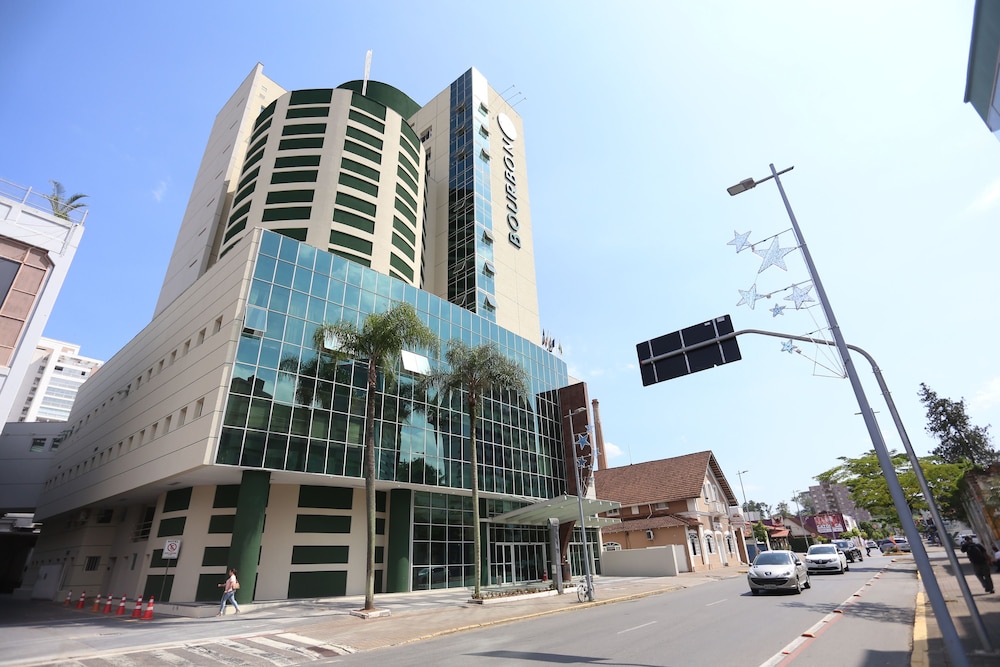 ★ 4.0
★ 4.0 ★ 4.0
★ 4.0 ★ 4.0
★ 4.0On the ground
Things to do in Joinville
- Walk Rua das PalmeirasThe 500-metre avenue lined with imperial palms planted in 1873, connecting Praça Nereu Ramos to the old palace. Free, always open, best at sunrise or 5pm when the light catches the trunks. The Museu Nacional de Imigração at the end is R$5, worth 45 minutes.
- Festival de Dança de JoinvilleLate July, 12 days, the largest dance festival in the world. Performances at Centreventos Cau Hansen and outdoor stages in Praça da Bandeira. Free open-air shows daily, ticketed gala events R$40–R$180. Book accommodation by April or stay 40 km away.
- Mirante de JoinvilleViewpoint on Morro da Boa Vista, 15 minutes from downtown by car. Panorama over the whole city and out to the Baía da Babitonga at São Francisco do Sul. R$5 parking, open 8am–8pm, terrible on rainy days (heavy fog). Small kiosk with coffee.
- Day trip to São Francisco do SulThe colonial coastal town 45 km east — 45-minute drive on BR-280. The historic centre is a UNESCO tentative-list site, with 18th-century Portuguese façades, the Museu Nacional do Mar, and calm-bay beaches. Better than anything Joinville itself offers.
- Museu Arqueológico de SambaquiOn Rua Dona Francisca near the old railway station, a small archaeology museum on shell-mound peoples who lived along the Babitonga bay long before German settlement. R$5 entry, open 9am–5pm Tuesday to Sunday, about 30 minutes to see properly.
- Cervejaria tour in Boa VistaJoinville has a small but active craft-beer scene, with taprooms clustered along Rua Blumenau serving pints from R$12. Not a destination in itself, but a reasonable way to fill an evening after a day of walking the downtown grid.
Getting around & the essentials
On foot
Start at the modernist Cathedral (Catedral Diocesana) with its distinctive white spire, walk south along Rua das Palmeiras between the imperial palms, past the Museu Nacional de Imigração, then loop back through Praça Nereu Ramos and along Rua do Príncipe with its immigrant-era shopfronts. Add the Cemitério dos Imigrantes at the north end for another 20 minutes and a genuinely moving read of the founding families' headstones. Finish with a coffee at one of the kiosks facing Praça Nereu Ramos before the midday heat sets in — the whole loop, benches included, rarely takes more than 90 minutes.
By road
Recommended, city is spread out
Transport
Joinville has its own small airport (JOI) with flights from São Paulo and Rio. From Florianópolis it's a 2h30 drive north on BR-101, intercity bus R$70. Curitiba is 2 hours north. Inside town you need a car or Uber — the city is spread out and the bus system is functional but slow. Uber R$12–R$25 for most cross-city trips. To São Francisco do Sul, 45 minutes east on BR-280 by car or R$18 intercity bus. The bus terminal (Terminal Urbano Central) sits on Rua Hermann August Lepper, a 10-minute walk from the Cathedral, so arriving by intercity coach still leaves the downtown loop within reach on foot. From JOI airport, a taxi or Uber into Centro runs about R$35–R$45 and takes 20 minutes outside rush hour.
Nightlife
Quiet, business-city pace
Good to know
Questions, answered
Is Joinville worth visiting?
For a specific reason — the dance festival, business, an overnight stop — yes. As a destination, no. It's a functional industrial city, not a tourist city. The historic downtown is a pleasant 90-minute walk, but the surrounding neighbourhoods are 20th-century sprawl. Use it as a base to visit São Francisco do Sul or as a stop between Curitiba and Florianópolis.
When is the Festival de Dança de Joinville?
The last two weeks of July, since 1983. In 2024 it ran July 16–27. Free open-air performances daily in Praça da Bandeira; ticketed gala events at Centreventos Cau Hansen from R$40. Book accommodation by April — every hotel in Joinville and within 50 km fills up entirely, and prices double or triple.
How do I get from Joinville to São Francisco do Sul?
Drive 45 km east on BR-280, about 45 minutes with no tolls of note. Without a car, intercity buses run several times a day from the Terminal Urbano Central for around R$18 one way. There is no direct rail or ferry link, so the road is the only realistic option for a day trip.
Is Joinville safe for tourists?
Yes, broadly — it is a middle-class industrial city with normal big-city precautions rather than acute tourist-targeted crime. Stick to the well-lit downtown streets around Rua das Palmeiras and Rua do Príncipe at night and use Uber rather than walking to outer neighbourhoods after dark. Petty theft risk rises, as everywhere in Brazil, in empty transit areas late at night.
Keep exploring
Nearby areas
Doing good is the business: every booking through Stay Santa Catarina funds one verified tonne of carbon removal — same room, same price, no markup.
Start your search